
Property investment in Marrakech
Investing in a boutique hotel in Marrakech in 2027: budget, profitability and 5-year business plan
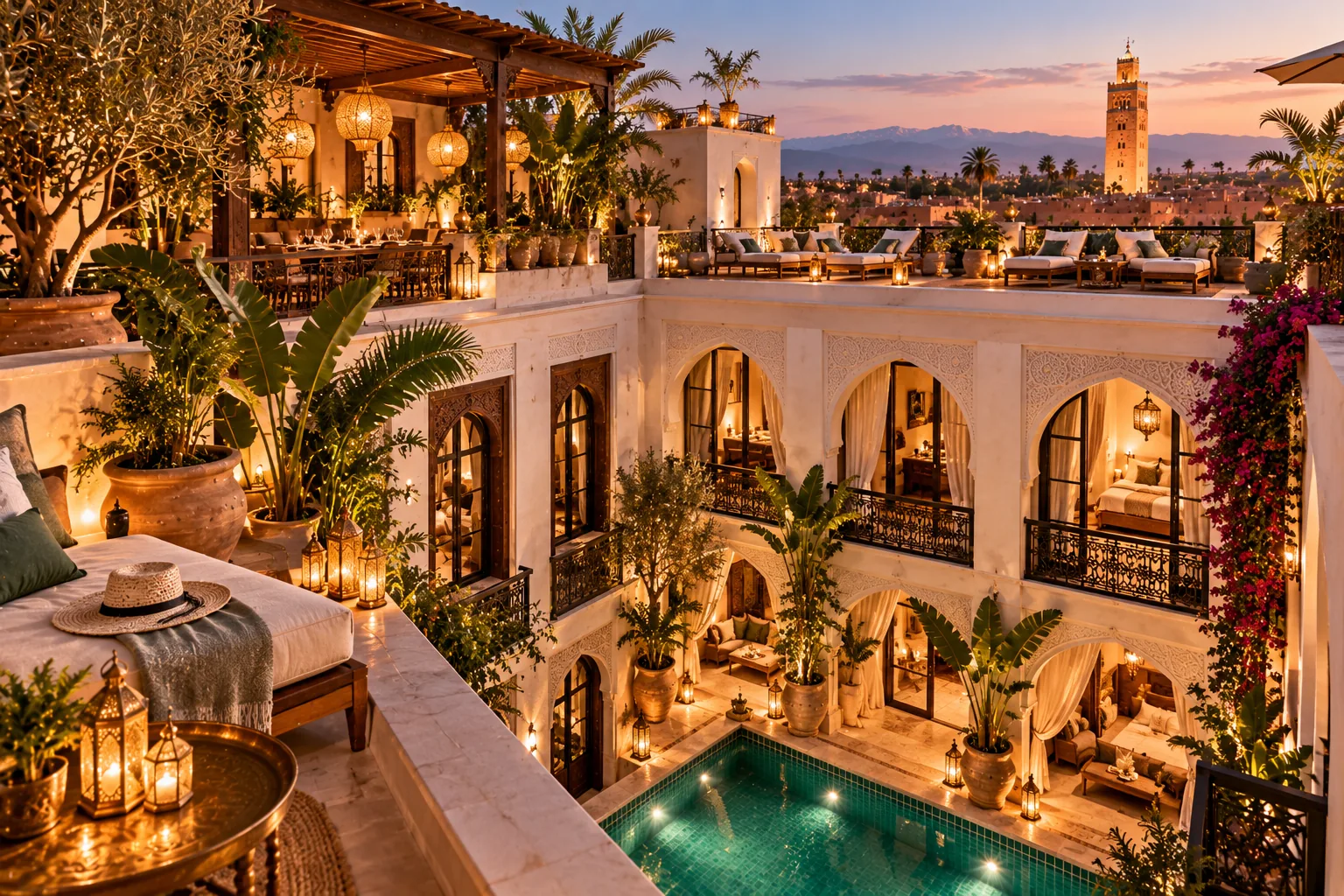
Can we invest in a boutique hotel in Marrakech and develop an establishment capable of generating several hundred thousand euros in annual turnover?
Yes, such an economic model can be considered. But between the theoretical turnover, the operating profit and the money actually available to the investor, the differences can be considerable.
Buying or building a boutique hotel is not simply a matter of acquiring a building and renting rooms.
It means investing simultaneously in three dimensions:
A real estate asset, the value of which depends in particular on its location, its quality and its condition.
A hotel company, which must attract travelers, manage its costs and deliver a quality experience.
A commercial brand, capable of differentiating itself, building customer loyalty and developing its distribution.
In Marrakech, this model can take the form of a collection riad, a premium guest house or a boutique hotel offering accommodation, catering and well-being.
But what budget should we plan for in 2027? How much can a ten-room boutique hotel earn? What profitability should you aim for? Which neighborhoods to favor? And how can you avoid an investment that requires a lot of capital without generating enough profit?
At Darnel Collection, we develop riad and boutique hotel projects in Marrakech by combining architectural design, real estate strategy and reflection on their future operation.
In this guide, we explore the investment journey and present Kasbah Nelaria & Spa, a ten-suite boutique hotel project in the Kasbah of Marrakech. An independent five-year simulation then explains how to analyze the economics of a ten-unit establishment.
Important: the budgets, prices, occupancy rates, financing and projections presented in this guide are educational hypotheses, unless otherwise stated. They do not constitute observed performance, nor quotes, nor guarantees of performance.
Investing in a Marrakech boutique hotel finances both a property asset and a hospitality business. Assess total capital, revenue by activity, costs, ramp-up and exit. This guide’s five-year simulation is illustrative and separate from Kasbah Nelaria’s forecast. Darnel’s method considers architecture, service organisation and the economic model together.
For the administrative framework, the official operating classification procedure distinguishes requirements by establishment type and category. A commercial boutique-hotel positioning does not remove the need to verify the framework applying to the project.
Before retaining a return figure, compare the total investment budget and riad operating costs and cash flow. The Kasbah Nelaria profile describes a project; it does not turn illustrative assumptions into observed results.
What is a boutique hotel?
A boutique hotel is an accommodation establishment which is generally distinguished by its architectural identity, its atmosphere, its human scale and the personalization of its service.
Unlike a standardized hotel, it seeks to offer a recognizable experience.
In Marrakech, a boutique hotel can take the form of a renovated traditional riad, a contemporary establishment inspired by Moroccan architecture or a high-end hospitality house.
The term boutique hotel designates above all a commercial positioning. It must be distinguished from the regulatory category and tourist classification officially applicable to the establishment.
The three drivers of value creation
1. Real estate value
It is based on the location, construction quality, technical condition, surfaces, equipment and possibilities of use.
2. Commercial value
It depends on the brand, reputation, customer base and the ability to sell rooms at the right price.
3. Operational value
It comes from cost control and the ability to transform turnover into sustainable results.
A boutique hotel can therefore have beautiful architecture without being a profitable business.
Conversely, a properly designed and operated establishment can gradually develop an economic value that exceeds that of its walls alone.
Darnel advice: before investing, analyze the real estate value and the performance of the hotel business separately. Do not pay for future profitability that has not yet been demonstrated.
Why invest in a boutique hotel in Marrakech in 2027?
Marrakech benefits from an international tourist reputation, a distinctive architectural heritage and a varied accommodation offer.
The city attracts different clienteles: couples, families, private groups, premium travelers, lovers of gastronomy and well-being.
This diversity can make it possible to create specialized hotel concepts.
But the tourism growth of a destination never guarantees the occupancy rate of a particular establishment.
A hotel that is poorly positioned, difficult to access or insufficiently marketed can experience disappointing results even in an attractive destination.
The four opportunities to analyze
A strong architectural identity
Moroccan materials, patios, terraces and artisanal work can contribute to a differentiating experience.
The development of well-being
A hammam, spa or treatments can enrich the customer experience and create an additional source of income.
Direct booking
An establishment with a strong identity can gradually develop its reservations through its own site, its social networks and its loyal customers.
International diversification
A commercial strategy targeting several markets can help limit dependence on a single customer base.
Darnel advice: establish a business plan based on ordinary tourist demand, integrating seasonality and off-peak periods. Exceptional events should be additional opportunities, not the basis of your funding.
How to analyze the boutique hotel market in Marrakech?
Market research should not be limited to the number of tourists visiting Morocco.
To evaluate a boutique hotel, you must understand the demand actually accessible to the establishment.
The five market indicators to study
On small screens, scroll the table horizontally if needed.
| Indicator | Why it matters |
|---|---|
| Tourist nights | Measure the evolution of the destination’s activity |
| Occupancy rate | Evaluate the use of available capacity |
| ADR | Understand the price levels actually obtained |
| RevPAR | Link average price and occupancy |
| Competing offer | Measure competitive pressure and differentiation opportunities |
National and regional statistics can be consulted at the Moroccan Ministry of Tourism and the Tourism Observatory. mtaess.gov.ma · observatoiredutourisme.ma
To establish your market study, record the nights and occupancy of Marrakech over the same period, with their annual evolution and their source. An occupancy rate published for all classified establishments does not constitute a forecast for a particular boutique hotel. No average rate or market occupancy rate is taken as given in the simulations in this guide.
Why is seasonality decisive?
An annual occupancy rate of 65% can mask significant differences between months.
Let's take an establishment that displays:
85% occupancy during certain peak periods.
60% during intermediate periods.
35% during the weakest periods.
These rates are illustrative.
Their interest is to show that personnel, maintenance and operating expenses do not necessarily decrease in the same proportions as turnover.
An annual business plan must therefore be supplemented by a monthly projection.
How to analyze five direct competitors?
For a ten-room boutique hotel in the Kasbah, the comparison must relate to establishments of similar level of range and concept.
Here are five positioning references to study, without automatically considering them as strictly equivalent competitors:
On small screens, scroll the table horizontally if needed.
| Reference establishment | Positioning to analyze |
|---|---|
| La Sultana Marrakech | Luxury hotels and spa experiences in the Kasbah sector |
| Les Jardins de la Médina | Boutique hotel, gardens and stay experience |
| El Fenn | Design, brand identity and premium experience |
| Riad Kniza | Traditional hospitality and personalized service |
| Royal Mansour Marrakech | Extreme luxury reference, useful for service standards but not as a direct price comparison |
These establishments represent qualitative positioning references, not a pricing study already carried out.
To construct a real comparison, it will be necessary to note the prices for the same dates, the same number of travelers and the same cancellation conditions.
It will also be necessary to check the capacity, the services included, the classification and the characteristics of each establishment.
The six questions to ask about every competitor
- What experience is he really selling?
- What type of clientele is it trying to attract?
- What equipment differentiates its offer?
- What price range does it display depending on the season?
- What distribution channels does it use?
- What weaknesses or opportunities appear in customer reviews?
Darnel tip: Don’t just try to replicate a hotel that works. Identify what your establishment will be able to offer differently and what this difference will eventually allow you to charge.
What budget should you plan to invest in a boutique hotel in Marrakech?
The budget depends mainly on the location, the surface area, the number of rooms, the condition of the building and the level of services.
A six-room establishment with no catering open to the public cannot be directly compared to a fifteen-room boutique hotel with a spa and restaurant.
Three examples of investment budgets
The following amounts are educational scenarios, and not average prices observed on the market.
On small screens, scroll the table horizontally if needed.
| Cost item | 6 rooms | 10 rooms | 15 rooms |
|---|---|---|---|
| Real estate acquisition | €350,000 | €800,000 | €1,250,000 |
| Fees and studies | €40,000 | €90,000 | €140,000 |
| Works and developments | €270,000 | €650,000 | €1,100,000 |
| Furniture and equipment | €70,000 | €180,000 | €280,000 |
| Spa, catering and common areas | €40,000 | €160,000 | €300,000 |
| Launch, unforeseen events and cash flow | €80,000 | €120,000 | €180,000 |
| Total investment | €850,000 | €2,000,000 | €3,250,000 |
Investment cost per room
On small screens, scroll the table horizontally if needed.
| Format | Total investment | Cost per room |
|---|---|---|
| 6 rooms | €850,000 | €141,667 |
| 10 rooms | €2,000,000 | €200,000 |
| 15 rooms | €3,250,000 | €216,667 |
Cost per room is a useful indicator, but it alone does not identify the best investment.
A ten-room property can support more expensive amenities and common areas than a small riad.
The question is whether these additional expenses generate sufficient income or improve asset value.
The five often underestimated expenses
Studies and authorizations. They must be planned before the work.
Technical equipment. Air conditioning, networks, waterproofing, ventilation and specific installations can represent significant amounts.
Hotel furniture. Bedding, linen, room equipment and common areas must correspond to the positioning.
Commercial preparation. Photographs, website, distribution, recruitment and launch marketing have a cost.
Start-up cash flow. It may take several months for an establishment to reach a stabilized level of revenue.
Darnel Tip: Always compare the total cost of the project, not just the price of the building. An under-budgeted investment may require additional financing at the most difficult time: just before opening.
What budget for your future boutique hotel?
Are you considering a hotel investment in Marrakech?
Access Club Privé Darnel Collection resources to compare budgets, potential revenues and different operating models.
Receive Darnel Collection investor tools →
In which areas to invest in a boutique hotel in Marrakech?
The choice of neighborhood influences the customer experience, accessibility, acquisition price and development possibilities.
The Kasbah: heritage and boutique hotels
The Kasbah has a strong historical identity.
It may be suitable for a premium establishment that values Moroccan architecture, well-being and a cultural experience.
It is in this district that the Kasbah Nelaria & Spa project is located.
Bab Doukkala: guest houses and intimate hospitality
Bab Doukkala can accommodate projects of charming riads and small-capacity guest houses.
Access, circulation and building constraints must be analyzed carefully.
Mouassine and Dar El Bacha: centrality and Medina experience
These sectors may interest customers wishing to stay in the heart of the Medina.
But centrality does not exempt us from studying acquisition prices, technical constraints and access.
Guéliz and Hivernage: urban hotels
These neighborhoods correspond to different environments from the Medina.
They can be suitable for urban, contemporary concepts or oriented towards customers looking for other uses.
The five criteria for comparing two locations
- Accessibility of travelers and luggage.
- Immediate environment and possible nuisances.
- Architectural potential of the building.
- Proximity to the experiences sought by customers.
- Overall cost of acquisition and transformation.
Darnel advice: the best neighborhood is not necessarily the most prestigious. It is the one in which your concept can attract customers while maintaining a satisfactory economic balance.
To learn more: In which districts of the Medina to invest in Marrakech?
Buy an existing hotel, renovate a riad or build?
Three main strategies can be considered.
Buy an existing establishment
This option allows you to study an operating history when reliable data is available.
The investor can analyze bookings, revenues, charges and customer reviews.
But he must also check the authorizations, contracts, technical condition and necessary future investments.
Renovate a riad
This strategy makes it possible to transform a building of character into a tourist establishment.
It requires an in-depth study of the structure, networks, waterproofing and development possibilities.
Build or restructure a tailor-made establishment
This approach makes it possible to design spaces according to the hotel program, subject to town planning rules and heritage constraints.
It can offer more freedom, but involves site, budget and schedule risks.
Comparison table
On small screens, scroll the table horizontally if needed.
| Criterion | Existing hotel | Riad to renovate | Construction |
|---|---|---|---|
| Operating history | Potentially available | Rarely directly comparable | None |
| Freedom of design | Limited | Varies | Greater where permitted |
| Construction risk | Depending on condition | Potentially high | Depends on studies and execution |
| Time to opening | Varies | Varies | Varies |
| Budget predictability | According to audit | Depends on discoveries | Depends on studies and contracts |
Darnel advice: establish the business plan before finalizing the architecture. The number of rooms, spa size and dining areas should be consistent with potential revenue.
Discover our guide to building a riad in Marrakech in 2027.
How to design a successful boutique hotel?
A boutique hotel must be attractive for travelers, but also functional for its team.
Poor design can permanently increase operating costs.
Rooms adapted to the positioning
Acoustic comfort, bedding, air conditioning, materials and bathroom contribute to the customer experience.
But the equipment must remain consistent with the targeted average price.
Really useful common spaces
Patio, rooftop, lounges and dining areas contribute to the perceived value.
However, they must be sized according to the number of customers and the intended uses.
Properly designed technical spaces
A boutique hotel notably requires premises for linen, products, equipment and staff needs.
These spaces do not directly generate turnover, but they contribute to the quality of the service.
A spa designed as an economic activity
A spa open to the public must be designed taking into account its circulation, its reception, technical constraints and its staffing needs.
It is not enough to install two cabins to create a profitable business.
Darnel advice: each space must be evaluated according to three criteria: its contribution to the customer experience, its creation cost and its operating cost.
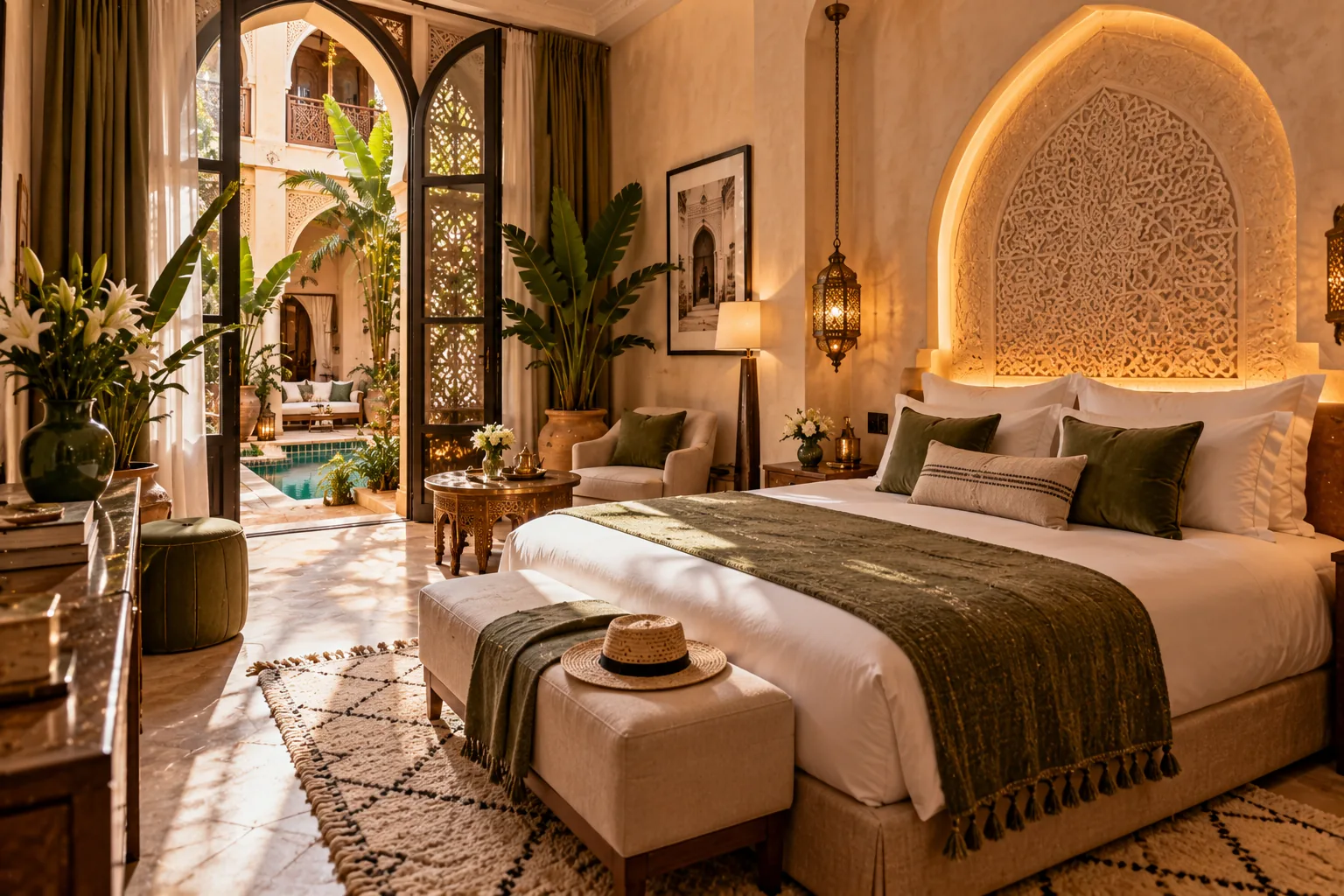
The three sources of income for a boutique hotel
An establishment can diversify its turnover through several activities.
First source: accommodation
The room turnover depends on the number of rooms, the occupancy rate and the average price.
Room turnover excluding tax = rooms × days available × occupancy × ADR excluding tax.
The ADR corresponds to the average price per room sold.
RevPAR measures room revenue per available room.
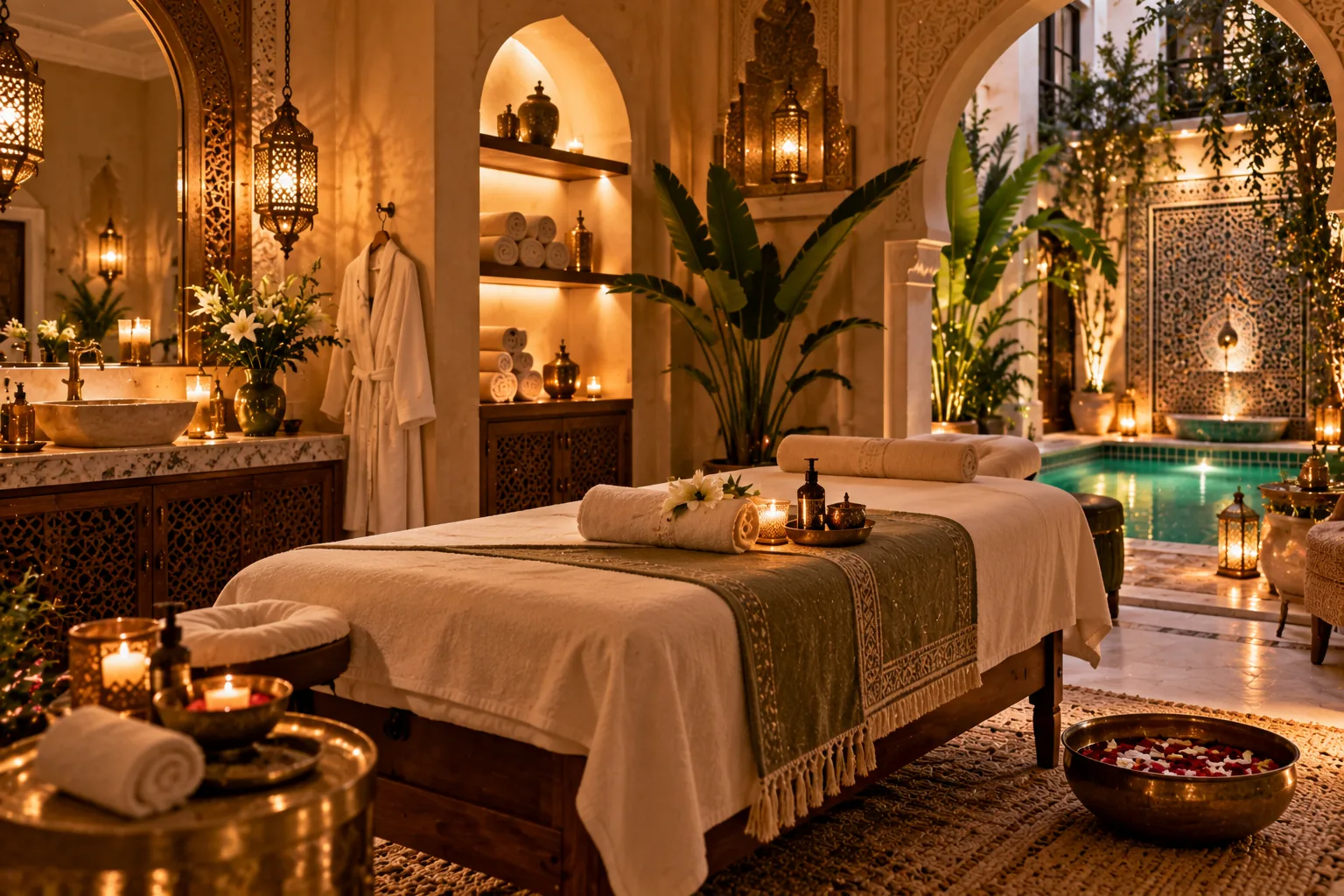
Second source: spa and well-being
A spa can offer massages, hammams, treatments and private experiences.
When it is open to the outside public, its turnover can become partially independent of hotel occupancy.
But this activity bears costs: personnel, consumables, maintenance, marketing and equipment.
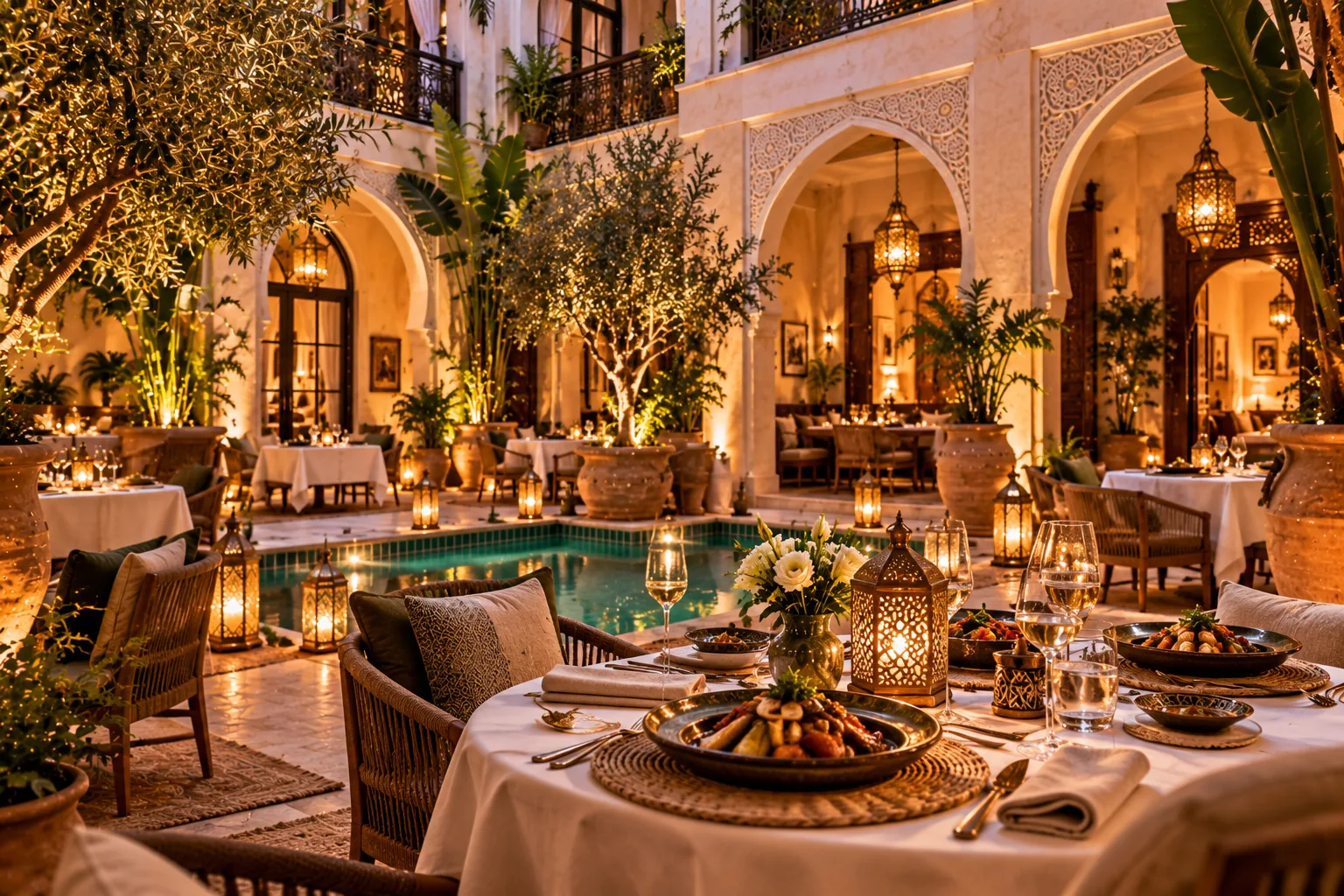
Third source: dining and experiences
Catering, private meals and certain experiences can contribute to turnover.
Their profitability depends on the volume of customers, the average basket and the cost of production.
Example of diversification
Let's imagine an establishment generating €600,000 excluding tax in annual turnover.
On small screens, scroll the table horizontally if needed.
| Activity | Income excluding tax |
|---|---|
| Rooms | €430,000 |
| Spa | €110,000 |
| Dining and other services | €60,000 |
| Total | €600,000 |
This table is illustrative.
Diversification can be interesting, but each activity must have its own financial monitoring.
Darnel advice: don't just look to increase turnover. Measure the actual margin generated by each service.
What expenses should be expected to operate a boutique hotel?
Turnover is not profit.
A boutique hotel in particular bears personnel, distribution, maintenance, marketing, energy and management costs.
Example of operating cost structure
For an establishment generating €600,000 excluding tax in annual turnover:
On small screens, scroll the table horizontally if needed.
| Cost item | Hypothetical annual amount |
|---|---|
| Staff | €125,000 |
| Purchases and consumables | €90,000 |
| Distribution and marketing | €65,000 |
| Energy and maintenance | €55,000 |
| Administration and insurance | €35,000 |
| Management and other expenses | €70,000 |
| Total expenses | €440,000 |
| Simplified operating surplus | €160,000 |
This result is calculated before depreciation, interest, taxes and certain investment expenses.
Fixed and variable charges
Fixed costs change little in the short term with the number of rooms sold.
Variable costs depend more on the activity.
This distinction is essential to calculate the break-even point.
Why personnel costs are strategic
A premium establishment must ensure quality service, but it must also adapt its organization to its capacity.
Staffing requirements depend on schedules, services offered, level of service and attendance.
Distribution commissions
A hotel that relies heavily on booking platforms can incur significant commissions.
Direct booking therefore constitutes a commercial lever, provided that the cost of acquiring direct customers is also measured.
Darnel advice: prepare a monthly table of expenses and compare each item to the initial budget. Growth in turnover should not mask a deterioration in margins.
To learn more: Operating costs for a riad in Marrakech: how much is actually left?
Kasbah Nelaria & Spa: a boutique hotel project with ten suites
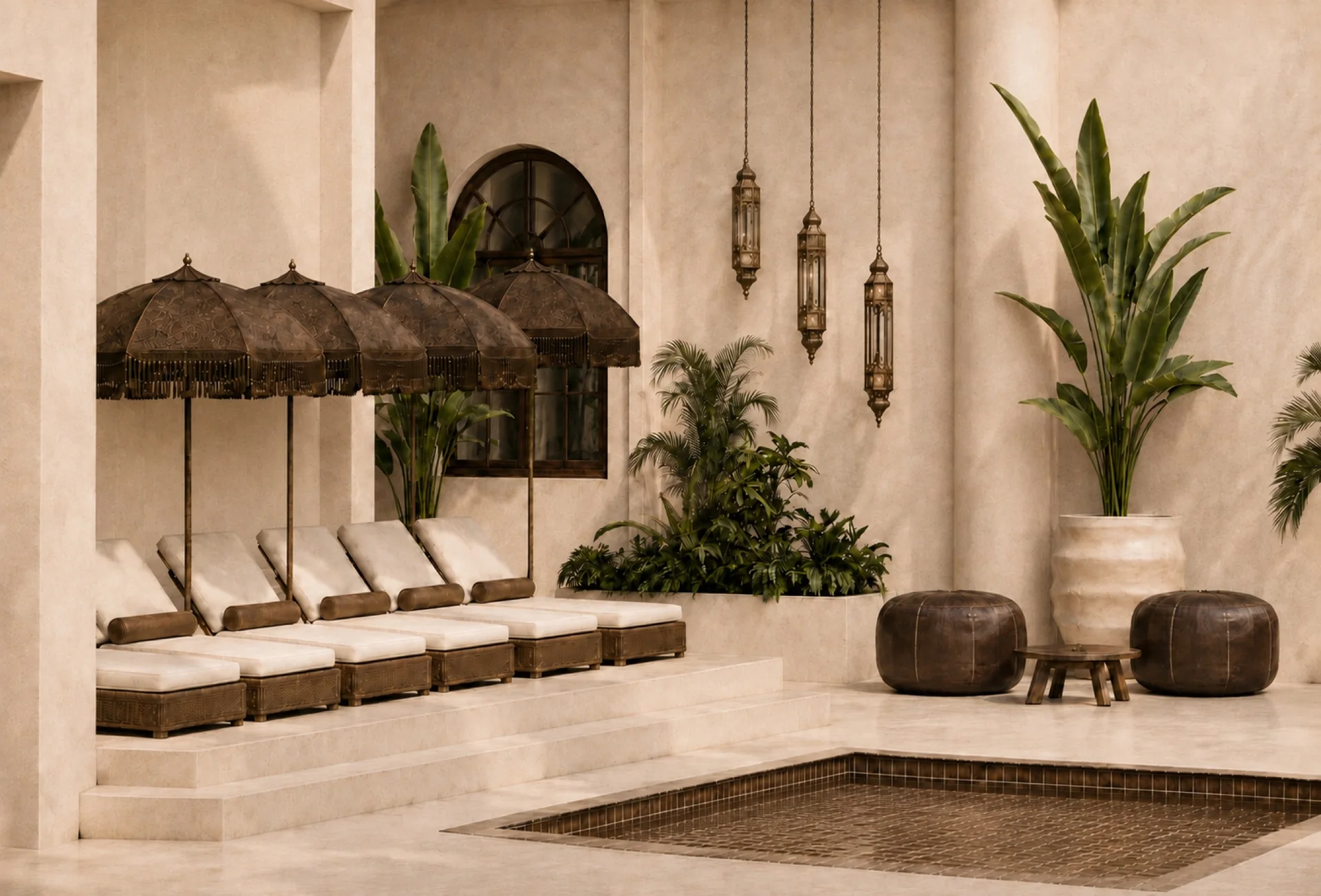
INVESTMENT CASE — KASBAH NELARIA & SPA
10 suites • Kasbah Marrakech • Boutique hotel & Spa
Kasbah Nelaria & Spa is a boutique hotel project developed by Darnel Collection in the Kasbah district of Marrakech.
The concept is based on a chic Berber identity, inspired by natural materials, the landscapes of the Moroccan desert and traditional hospitality.
The establishment is designed to offer an experience combining accommodation, well-being and cultural immersion.
Its spa, designed to also welcome external guests, constitutes an important element of the planned business model.
Three benchmarks on the project
- 10 suites planned, with a spa.
- Around 800 m² announced in the project presentation.
- From €2,300,000, according to the commercial presentation of the project.
The project presentation page displays a surface area of approximately 800 m² and a price starting from €2,000,000. The contractual file must specify the scope of this price, the equipment and the costs remaining the responsibility of the purchaser. This displayed price should not be automatically assimilated to the total cost of the investment.
Why this concept is interesting to analyze
A ten-room establishment can develop several commercial activities.
Accommodation is its main activity, while spa and catering can help diversify income.
But this diversification also involves additional costs.
The objective is therefore to determine whether the entire program can generate profitability consistent with the capital invested.
Discover Kasbah Nelaria & Spa and request its presentation →
Educational simulation: business plan for a boutique hotel over five years
To understand the economic mechanisms of a ten-unit boutique hotel, here is an independent ramp-up scenario over five full years of operation. The amounts are expressed in euros excluding tax; operating days are standardized to 365 days per year.
This model is not an approved forecast for Kasbah Nelaria & Spa. Its ADR, occupancy, expense and financing assumptions only illustrate a calculation method; they are neither a commercial offer nor a performance guarantee.
Business Assumptions
On small screens, scroll the table horizontally if needed.
| Year | ADR excluding tax | Occupancy |
|---|---|---|
| Year 1 | €170 | 48% |
| Year 2 | €190 | 55% |
| Year 3 | €210 | 62% |
| Year 4 | €230 | 67% |
| Year 5 | €250 | 70% |
The increase in ADR from €170 to €250 represents approximately 47% in four annual intervals, or almost 10.1% per year. It assumes a significant move upmarket and commercial development, and should not be interpreted as a simple automatic price indexation.
They remain to be confronted with real market demand.
Revenue projection
On small screens, scroll the table horizontally if needed.
| Year | Room revenue excl. tax | Spa revenue excl. tax | Dining and other revenue excl. tax | Total revenue excl. tax |
|---|---|---|---|---|
| 1 | €297,840 | €55,000 | €32,000 | €384,840 |
| 2 | €381,425 | €80,000 | €43,000 | €504,425 |
| 3 | €475,230 | €110,000 | €55,000 | €640,230 |
| 4 | €562,465 | €135,000 | €68,000 | €765,465 |
| 5 | €638,750 | €160,000 | €80,000 | €878,750 |
The cumulative turnover reached €3,173,710 excluding tax over five full years. This accumulation represents sales, and not cumulative profit or repayment of invested capital.
How to justify spa income?
In year 5, the assumption is €160,000 excluding tax.
Suppose:
- 320 days open.
- An average basket of €100 excluding tax per service.
- Five paid services per opening day.
The calculation gives:
320 × €100 × 5 = €160,000 excluding tax.
This objective therefore requires an operational and commercial capacity enabling it to sell five daily services on average.
External demand, staff numbers, available cabins and direct costs must be checked.
How to justify catering income?
In year 5, the scenario retains €80,000 excluding tax.
Suppose:
320 days of service.
An average basket of €50 excluding tax.
Five paid services or covers per day.
The calculation gives: 320 × €50 × 5 = €80,000 excluding tax.
This assumption must be adjusted according to the type of catering, breakfasts possibly included in the price of the rooms and other services recorded.
Please note: you must avoid counting income included in packages twice.
Projection of expenses and operating income
On small screens, scroll the table horizontally if needed.
| Year | Revenue excl. tax | Operational expenses | Operating surplus |
|---|---|---|---|
| 1 | €384,840 | €346,356 | €38,484 |
| 2 | €504,425 | €418,673 | €85,752 |
| 3 | €640,230 | €499,379 | €140,851 |
| 4 | €765,465 | €566,444 | €199,021 |
| 5 | €878,750 | €632,700 | €246,050 |
Operating margins of 10%, 17%, 22%, 26% and 28% are assumptions imposed on the model. Expenses are calculated by difference with turnover; they do not result from a validated item-by-item budget. The amounts are rounded to the euro.
The scenario therefore assumes a significant improvement in operational efficiency.
Illustrative breakdown of operating costs in year 5
On small screens, scroll the table horizontally if needed.
| Cost item | Annual budget |
|---|---|
| Staff and employer contributions | €145,000 |
| Purchases and consumables | €130,000 |
| Distribution and marketing | €105,000 |
| Energy, upkeep and maintenance | €75,000 |
| Administration and insurance | €45,000 |
| Management and other operational expenses | €132,700 |
| Total | €632,700 |
These amounts are modeling allowances. They do not come from quotes, contracts or audited operating accounts of the project. The model assumes an owner operating the premises: no real estate rent is added. If the building is rented by an operating company, the rent and flows of each entity must be integrated separately.
The “management and other expenses” item must be broken down to identify fees, outsourced services and other expenses. It does not correspond to a Darnel Hospitality quote. In a contractual forecast, management fees and distribution commissions must be calculated according to their respective bases, without omission or double counting.
Why are margins increasing?
In this hypothesis, revenues increase more quickly than certain fixed costs.
Variable costs are also increasing, but their relative share may decrease if the establishment becomes more efficient.
This improvement is not automatic.
It depends on the pricing policy, the occupancy rate, staff productivity and purchasing control.
Illustrative operational ratio in year 5
Based on a hypothetical overall cost of €2,300,000, separate from the price displayed for Kasbah Nelaria:
€246,050 ÷ €2,300,000 × 100 = 10.7%.
This ratio is an indicative operating return before depreciation, financing and taxation.
It does not constitute a net return for the investor, nor an internal rate of return: it ignores in particular the dates of flows, additional investments and the exit value.
If the total cost actually incurred is greater than 2 000 000 €, the ratio must be recalculated on this full cost. The acquisition price alone should not be used as a denominator if costs, equipment or cash flow requirements are added.
Darnel Tip: Always ask for a detailed income statement, cash flow budget and monthly projection. Turnover is not enough to demonstrate the profitability of a hotel.
How to finance a boutique hotel in Marrakech?
Financing can significantly change the return on equity and the risk borne by the investor.
Example: 30% contribution and 70% financing
Let's take a hypothetical total cost of €2,300,000, without equating it to the sale price or the final budget of Kasbah Nelaria. Acquisition costs, equipment, launch, unforeseen events and cash flow requirements must be included in the actual cost or financed additionally.
On small screens, scroll the table horizontally if needed.
| Financing | Amount |
|---|---|
| Investor contribution, 30% | €690,000 |
| Bank loan, 70% | €1,610,000 |
| Total investment | €2,300,000 |
Let's assume a loan amortizing over fifteen years with a hypothetical fixed rate of 6% per year, excluding insurance and fees.
The theoretical monthly payment would be approximately €13,586, or €163,033 per year, for 180 constant monthly payments at the monthly rate of 0.5%, excluding insurance and fees.
These conditions do not represent an available bank offer or financing proposal.
What cash flow in year 5?
In our scenario:
Operating surplus: €246,050.
Theoretical annual debt service: approximately €163,033.
There would remain approximately €83,017 before taxes, renewal investments, variation in working capital requirements and other adjustments. The repayment of the capital of the loan constitutes a cash outflow, but not an expense on the income statement.
This amount is therefore not the investor's net profit.
Financing risk at the start of operations
In year 1, the scenario foresees only €38,484 of operating surplus.
This amount would be much lower than the annual debt service in the example.
Over the first three years, the annual gaps between operating surplus and debt service would be approximately −€124,549, −€77,281 and −€22,182: a cumulative shortfall of about €224,012. Additional funding is needed if a sufficient reserve is not already included in the budget, without counting the same cash twice. A repayment deferral shifts payments and may increase borrowing costs; it does not eliminate the funding requirement.
A bank could also refuse financing with insufficient repayment capacity.
Darnel Tip: Don’t just calculate the potential return on equity. Check the institution's repayment capacity in conservative scenarios, particularly in the early years.
Operational balance threshold: what occupancy rate covers expenses?
The break-even point corresponds to the level of activity necessary to cover the expenses considered.
It mainly depends on fixed charges and the contribution margin generated by each room sold.
Simplified teaching example
Consider a ten-room boutique hotel with:
ADR excluding tax: €250.
Annual fixed charges: €240,000.
Variable charges: 25% of room turnover.
365 days of availability per room.
The contribution margin on overnight stays is 75%.
The room turnover necessary to cover fixed charges is:
€240,000 ÷ 75% = €320,000 excluding tax.
The theoretical maximum capacity of rooms at €250 ADR is:
10 × 365 × €250 = €912,500 excluding tax.
The occupancy threshold is therefore:
€320,000 ÷ €912,500 × 100 = 35.1%.
Be careful with interpretation
This result is only that of a simplified model centered on rooms.
It does not represent the actual profitability threshold of Kasbah Nelaria.
It excludes in particular specific costs and contributions from the spa and catering, financial costs, depreciation and taxation.
To obtain a usable profitability threshold, you must have a forecast income statement breaking down fixed and variable costs by activity.
Three performance scenarios in year 5
On small screens, scroll the table horizontally if needed.
| Indicator | Conservative | Base case | Optimistic |
|---|---|---|---|
| ADR excluding tax | €200 | €250 | €300 |
| Occupancy | 55% | 70% | 75% |
| Room revenue excl. tax | €401,500 | €638,750 | €821,250 |
| Additional income excluding tax | €100,000 | €240,000 | €300,000 |
| Total revenue excl. tax | €501,500 | €878,750 | €1,121,250 |
| Assumed operating margin | 12% | 28% | 32% |
| Operating surplus | €60,180 | €246,050 | €358,800 |
These scenarios show the importance of occupancy, ADR and operating cost control.
In the conservative scenario, the operating surplus of €60,180 would not cover the annual debt service from the previous example.
Darnel Tip: Always test your project with a lower ADR, lower occupancy, and higher operating costs than your central scenario.
Is your future boutique hotel financially viable?
Before committing, compare several operating scenarios and identify the most sensitive assumptions.
Access Darnel Collection resources and simulator →
How to value and resell a boutique hotel?
A boutique hotel is a real estate asset, but its value can also depend on the quality and sustainability of its operation.
The main valuation factors
- Location and real estate characteristics.
- Technical condition and quality of equipment.
- Authorizations and legal situation.
- Historical turnover.
- Recurring operating income.
- Reputation and customers.
- Real estate and hotel market conditions.
Why an increase in value is never guaranteed
A hotel acquired for 2.3 million euros could theoretically increase in value if its operation progresses.
But it would be incorrect to say that it will necessarily be worth 3.5 or 4 million euros in five years.
A serious valuation requires real estate expertise and an analysis of the performances actually observed.
How to reason about the exit?
The investor must determine whether he plans to keep the establishment, pass it on or resell it.
It is also necessary to distinguish the sale of the building, the transfer of a company and the tax consequences of each transaction.
Darnel Tip: Define your exit strategy before the acquisition. The potential resale value should be a studied scenario, not a commercial promise.
Regulation, taxation and due diligence before buying
The operation of a tourist establishment in Morocco is regulated.
Law No. 80-14 and its implementing texts regulate tourist accommodation establishments. The applicable category, operating authorization and classification must be verified for each project with the relevant tourism delegation. A building permit does not constitute an operating authorization.
“Boutique hotel” here describes the commercial positioning. For targeted categories of three stars and above, the system presented by the ministry in May 2026 also provides for mystery visits evaluating the quality of service during the initial classification and its renewal. Safety requirements and authorizations specific to the spa or catering must be verified according to the program.
Authorizations and controls
Before investing, you should particularly consider:
- The land situation.
- Construction or transformation authorizations.
- Town planning rules.
- Possible asset constraints.
- Security requirements.
- Tourist operating conditions.
- Social and tax obligations.
What taxation for a boutique hotel?
The tax regime depends on the ownership and operating structure, the nature of the services and the conditions applicable to each activity. IS or IR, VAT, tourist taxes and social obligations must be treated separately. A single rate should not be automatically applied to accommodation, spa and catering.
The simulations in this guide are carried out before taxation. An edition dated 2027 must be updated upon publication of the texts applicable to this tax year: no measure announced or proposed must be presented as definitively adopted. Taxable profit, cash flow and amounts distributable to the investor are three distinct concepts.
To learn more: Real estate taxation in Morocco in 2027: taxes and duties.
Due diligence checklist: twenty essential checks
Legal and real estate situation
- Check the title and land situation.
- Identify easements and possible charges.
- Examine construction and transformation authorizations.
- Check surfaces and planes.
- Have the structural and technical condition checked.
Tourist exploitation
- Check applicable permissions and classification.
- Review security requirements.
- Check technical equipment.
- Check supplier contracts.
- Examine employment contracts and social obligations.
Financial performance
- Obtain available operating accounts.
- Check income by activity.
- Analyze historical occupancy rates.
- Study ADR and RevPAR.
- Review charges, commissions and fees.
Marketing and risks
- Review customer reviews and reputation.
- Study distribution channels.
- Check future reservations and commitments.
- Evaluate the work and investments to be planned.
- Have the taxation and resale conditions analyzed.
Darnel Tip: This checklist is a starting point. An acquisition worth several million euros must be subject to appropriate legal, technical, financial and tax audits.
How to market a boutique hotel to improve its profitability?
Commercial success must be prepared before opening.
A boutique hotel can have magnificent rooms without achieving its objectives if its distribution strategy is insufficient.
First lever: travel agencies and partners
Specialized agencies, tourism partners and prescribers can help develop a targeted clientele.
Second lever: reservation platforms
Platforms can provide visibility and bookings, but their commissions must be integrated into the business model.
Third lever: the website and direct booking
A high-performance site, professional photographs and a clear booking process can contribute to the development of direct sales.
Fourth lever: social networks
Videos, photographs and editorial content are used to present the proposed experience.
Fifth lever: advertising campaigns
Advertising can support the launch or certain commercial periods, as long as you track the cost of customer acquisition.
Sixth lever: offers and experiences
Themed stays, wellness experiences and private offers can help differentiate the establishment.
Indicators to follow each month
- Occupation.
- ADR.
- RevPAR.
- Turnover by activity.
- Share of direct reservations.
- Distribution commissions.
- Customer acquisition cost.
- Staff costs.
- Operating result.
Darnel Hospitality support
Darnel Hospitality develops marketing and management approaches for tourist establishments.
The strategy can notably focus on distribution, revenue management, digital visibility and performance management.
Discover Darnel Hospitality support →
FAQ: investing in a boutique hotel in Marrakech
What budget do you need to invest in a boutique hotel in Marrakech?
The budget depends on the number of rooms, location, condition of the building and program. It is necessary to integrate the acquisition, costs, work, equipment and launch cash flow.
Is it profitable to invest in a boutique hotel?
A boutique hotel can be profitable if the investment cost, income and expenses are consistent. A study must integrate several scenarios and take risks into account.
How much can a ten-room boutique hotel earn?
With an ADR excluding tax of €250 and an occupancy of 70%, ten rooms available 365 days can generate €638,750 excluding tax in annual turnover in overnight stays. This is a simulation, not a market average.
What is the difference between a riad and a boutique hotel?
The riad refers in particular to a traditional architectural form. The boutique hotel designates a commercial accommodation concept. Regulatory categories must be checked separately.
What is the best area to invest?
The Kasbah, Bab Doukkala, Mouassine and Dar El Bacha can present interesting characteristics for projects in the Medina. The choice depends on the concept, budget and access.
Should you buy an existing hotel or build?
An existing establishment may have an operating history. A to-be-built project offers more design freedom when the rules allow, but involves site and schedule risks.
What is the investment cost per room?
It corresponds to the overall investment divided by the number of rooms. It must be compared to the positioning, equipment and potential economic result.
How to calculate RevPAR?
RevPAR corresponds to room revenue divided by the number of rooms available, or ADR multiplied by the occupancy rate.
Does a spa improve profitability?
It can diversify income, but its effect depends on demand, rates, personnel and specific charges.
Can you finance a boutique hotel with a loan?
Financing may be considered depending on the project, guarantees, contribution and repayment capacity. The conditions must be studied with the financial institutions.
Does the five-year simulation give the profitability of Kasbah Nelaria & Spa?
No. In the independent simulation, the operating surplus for year 5 reaches €246,050, or 10.7% of a hypothetical total cost of €2.3 million, before depreciation, financing and taxation. The profitability specific to Kasbah Nelaria & Spa must be studied based on its file, its complete cost and its operating conditions.
Can you operate a boutique hotel from France?
An investor can organize remote operation with a local team and suitable control tools. Legal, social and fiscal obligations must be respected.
Can you resell a boutique hotel after five years?
A resale may be considered depending on the applicable legal and commercial conditions. Its value will depend in particular on the assets, results and the market.
How to obtain the Kasbah Nelaria & Spa file?
The presentation of the project can be requested from its dedicated page.
Discover Kasbah Nelaria & Spa →
To deepen your investment in Marrakech
Find our other guides:
- Investing in Marrakech in 2027: the complete guide
- Buying a riad in Marrakech: prices and procedures
- Building a riad in Marrakech in 2027
- Real estate taxation in Morocco in 2027
- The twelve indicators of profitability of a riad in Marrakech
Our book: Succeeding in your new life in Morocco
Succeeding in your new life in Morocco: The practical guide to settling down, investing and prospering
Are you planning to settle down, invest or develop an activity in Morocco?
This book provides additional reference points to prepare your project.

Conclusion: investing in a boutique hotel means developing a real estate asset and a business
Investing in a boutique hotel in Marrakech can combine real estate, hospitality and entrepreneurial activity.
But success depends on a set of decisions: location, design, budget, financing, marketing and cost control.
A ten-room hotel can generate significant revenue while maintaining limited profitability if its costs are poorly controlled.
Conversely, a properly positioned and managed establishment can gradually develop its performance.
Kasbah Nelaria & Spa illustrates Darnel Collection's approach: designing a distinctive boutique hotel with ten suites, a chic Berber identity and a spa. The independent financial simulation in this guide explains how to examine a hotel model; it does not replace the specific project forecast.
The objective is not to promise profitability.
It is to build a real estate and hotel project whose risks, financial needs and prospects can be evaluated methodically.
Are you considering investing in a boutique hotel in Marrakech?
Do you have an investment budget and would like to study a hotel project with six, ten or fifteen rooms?
Darnel Collection supports you in thinking about your investment, its design and its operating potential.
Review my total capital and hotel operating scenarios →
About the author
Georges Lelièvre — Darnel Collection
Darnel Collection develops tourist real estate projects in Marrakech, combining architectural design, real estate investment and hotel performance strategy.
Editorial note: the financial projections are educational and distinct from the Kasbah Nelaria & Spa file. They do not constitute a validated market study, nor a financing offer, nor a guarantee of income or valuation. References: Ministry of Tourism, operating classification procedure; press release of May 14, 2026 on mystery visits; commercial presentation of Kasbah Nelaria & Spa. The 2027 tax regime must be confirmed with the texts applicable to the financial year concerned. mtaess.gov.ma · mtaess.gov.ma · darnelcollection.com