
Property investment in Marrakech
Investing in a boutique hotel in Marrakech: what profitability can you expect?
Room nights, spa, dining, additional sales and packaged stays: analyse a distinctive boutique hotel’s target profitability.
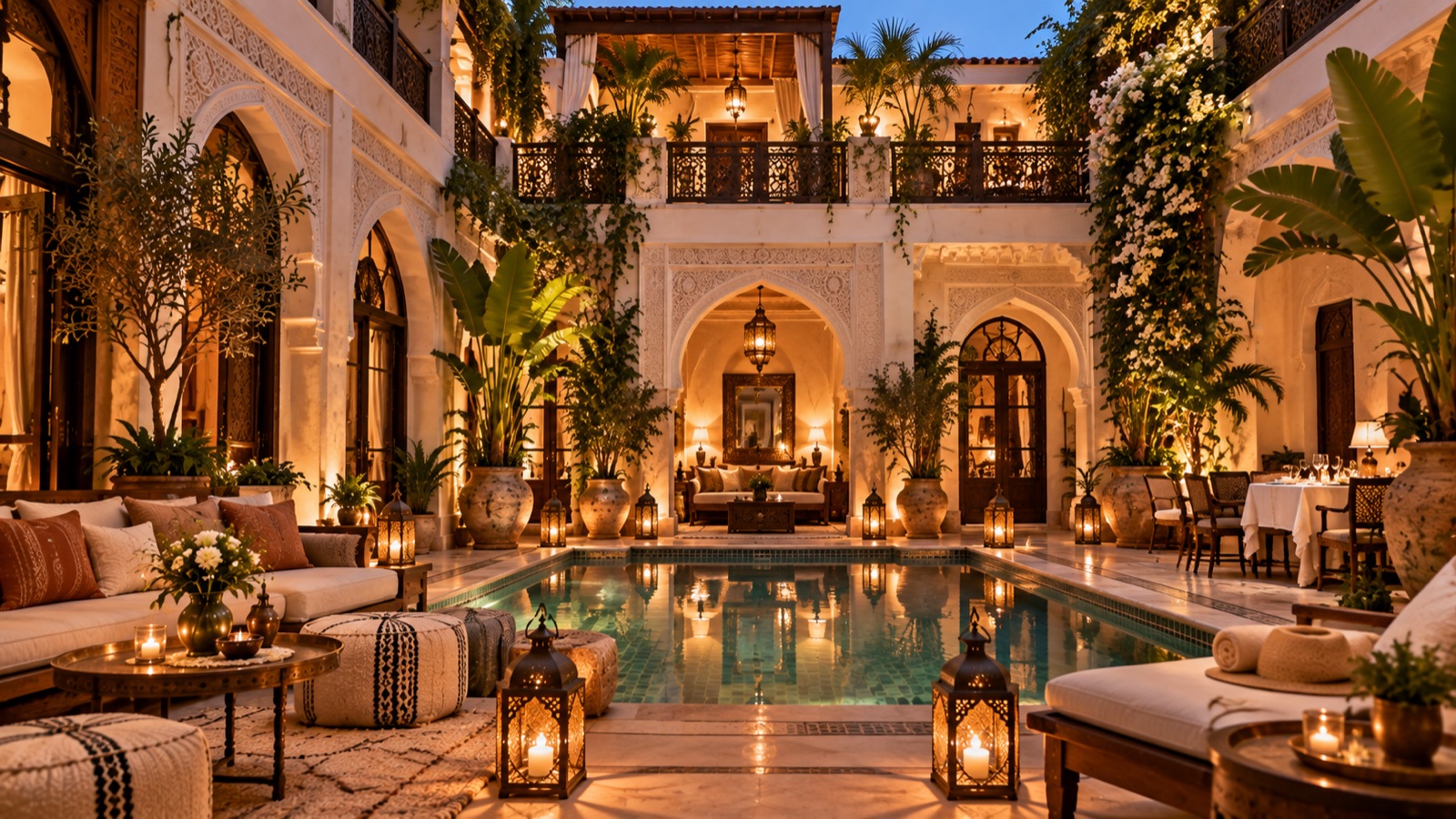
Buying a riad in Marrakech to transform it into a boutique hotel can bring together two investment approaches: owning a property asset and running a genuine hotel business.
This is precisely what distinguishes a boutique hotel from a traditional property investment. Value creation no longer rests solely on changes in property prices. It can also come from:
- overnight stays;
- the spa;
- dining;
- additional sales;
- all-inclusive offers;
- and, over time, the value of the hospitality asset itself.
To understand this model, we will use Kasbah Nelaria & Spa as our example: a distinctive ten-room boutique hotel project in Marrakech, whose projected business model is built around five revenue streams.
The ambition is to turn a reference acquisition base of €2,000,000 into a hospitality asset capable, at maturity and if the business plan’s assumptions are achieved, of generating several hundred thousand euros in annual profit.
Boutique hotel profitability should be assessed against total capital and the costs of each activity, not acquisition price alone. The Kasbah Nelaria profits presented here are Darnel business plan targets, not observed results. The 25% and 35% ratios use only the reference price of €2,000,000: they are not a complete return on investment.
To complete the denominator, consult the total investment budget; to compare revenue with costs and cash requirements, continue with riad operating costs. The programme and assumptions must be checked in the project’s current dossier.
At a glance: Kasbah Nelaria & Spa’s target figures
The projected model assumes a gradual operational ramp-up:
- Year 1: target net profit of €300,000 and target average rate of €150;
- Year 2: €400,000 and €200;
- Year 3: €500,000 and €250;
- Year 4: €600,000 and €300;
- Year 5: €700,000 and €350.
Compared solely with the €2,000,000 reference acquisition price, Year 3’s target net profit would represent a simple ratio of approximately 25%. In Year 5, the €700,000 target would correspond to 35%.
They nevertheless illustrate the model’s ambition: to acquire more than a building and create an income-generating hospitality asset.
Why is Marrakech suited to this type of investment?
Demand is the first requirement for a hospitality project. By the end of May 2026, Marrakech’s classified tourism accommodation establishments had recorded 6.05 million overnight stays, up 10% year on year. Average occupancy reached 72%, and Marrakech represented approximately 33% of classified overnight stays recorded in Morocco over the first five months, according to Tourism Observatory data reported by the official portal of the Kingdom of Morocco.
These figures obviously do not guarantee an individual property’s performance. They nevertheless show the depth of the tourism market in which a boutique hotel will position itself.
A hospitality asset needs a sufficiently deep market to support segmentation, moving upmarket and revenue diversification.
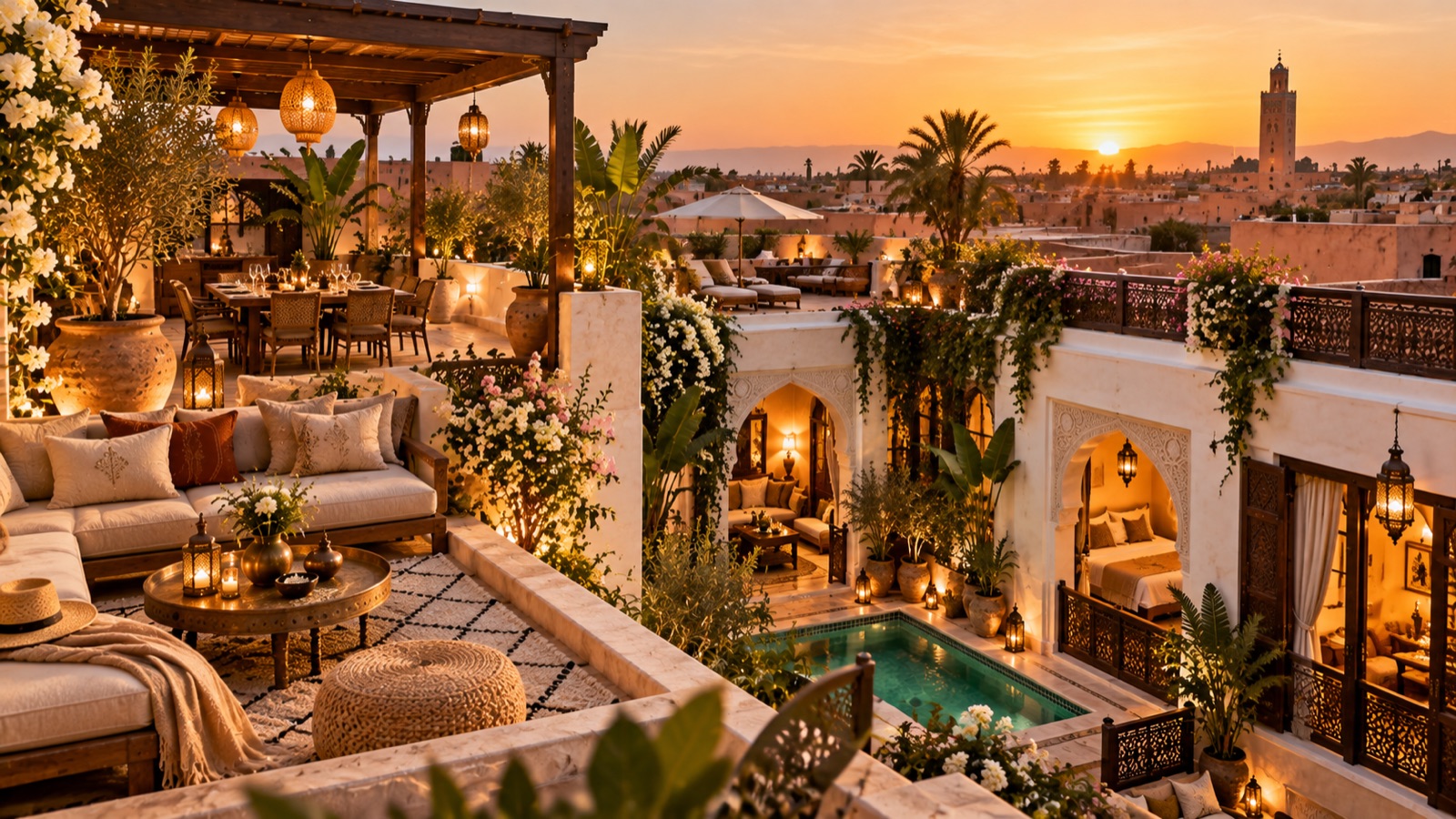
Click the photograph to discover the Kasbah Nelaria & Spa project.
The first mistake: considering only room count
Kasbah Nelaria & Spa is planned with ten rooms. The simplest analysis would therefore be:
Room count × occupancy × average rate.
This formula remains essential, but tells only part of the story. A boutique hotel can create several revenue opportunities from the same guest and property asset.
The project has therefore been designed around five revenue streams:
- overnight stays;
- the spa;
- dining;
- additional sales;
- All In packages.
The aim is to increase both revenue per room and revenue per guest. This is a fundamental difference between simple accommodation and a genuine hotel model.
Revenue stream 1: overnight stays
Rooms naturally remain the main driver. Kasbah Nelaria & Spa’s upmarket development plan assumes a progressive target average rate:
- Year 1: €150;
- Year 2: €200;
- Year 3: €250;
- Year 4: €300;
- Year 5: €350.
Why not target €350 immediately? A newly opened property generally needs to build its reputation, reviews, image, clientele, distribution, recognition and direct-booking share progressively.
The average rate must be supported by genuine perceived value. With ten rooms, each ADR increase can have a considerable impact.
Take just €50 more in average rate. For illustration, at 70% occupancy:
10 × 365 × 70% × €50 = €127,750 in potential additional annual room revenue.
Increasing rate positioning is therefore a major value-creation lever. To explore this mechanism, see What profitability can you expect from a riad in Marrakech?.
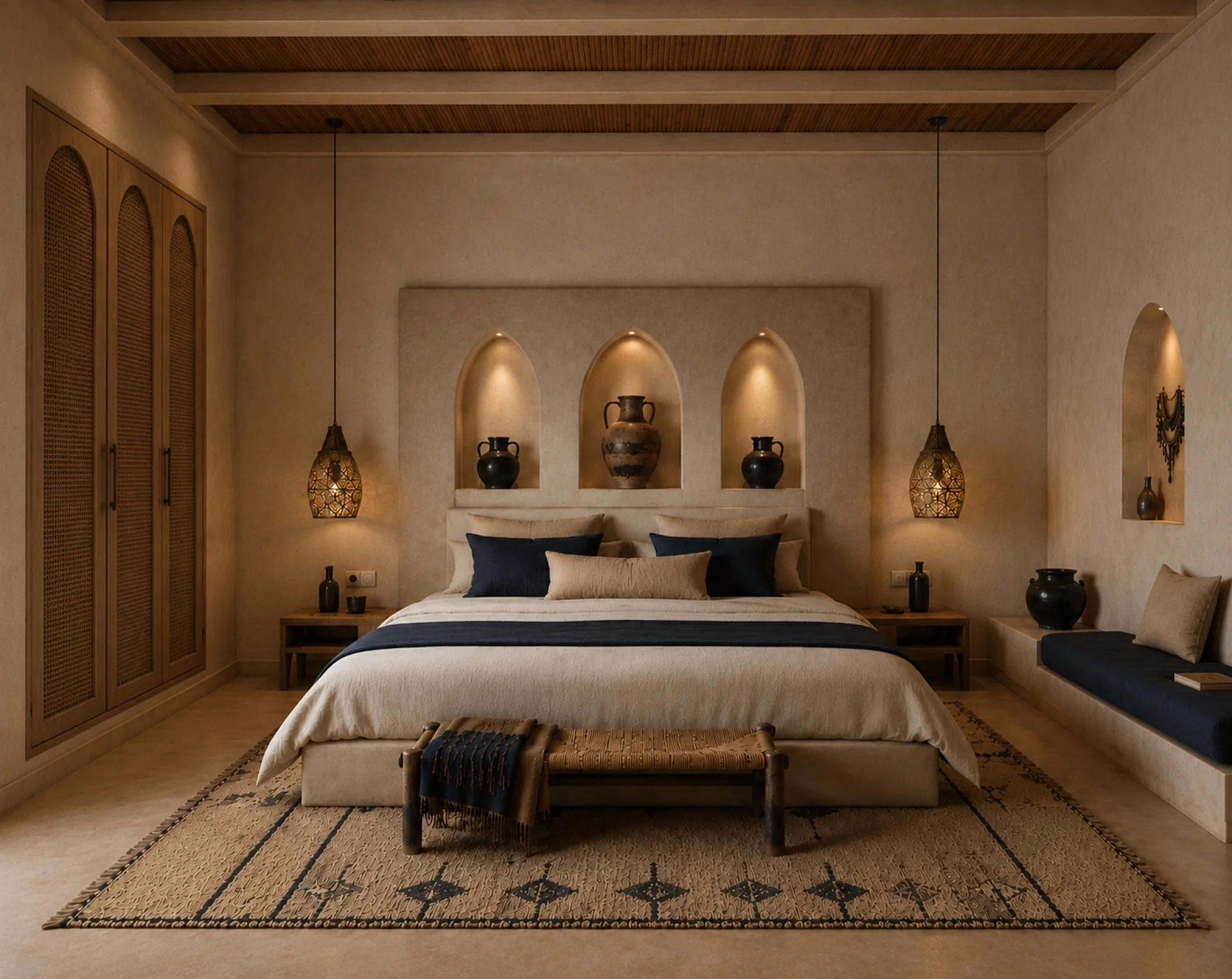
Rooms contribute to perceived value and the average rate.
Revenue stream 2: a spa
The spa complements the guest experience at Kasbah Nelaria.
The targeted potential at maturity is €500–€1,000 in daily revenue:
- €500 per day over 300 operating days: €150,000 annually;
- €1,000 per day over 300 days: €300,000 annually.
This is potential revenue, not profit, before staffing, products and other associated costs. The spa enriches the services offered to overnight guests.
This strategy may also partially reduce economic dependence on room count alone.
Revenue stream 3: dining
The same approach applies to dining. The proposed target is €300–€900 in daily revenue. Over 300 operating days, this would theoretically represent €90,000–€270,000 in annual revenue.
However, the aim is more than simply opening a restaurant. The experience must fit the boutique hotel: breakfast, lunch, dinner, rooftop, private experience, special menu or brunch.
Dining can thus become a revenue centre, a service for residents, an experience and a complement to the stay.
Revenue stream 4: additional sales
A guest booking a €250 room need not generate only €250 in revenue. Depending on their stay, they may also buy:
- a transfer;
- a massage;
- an excursion;
- a dinner;
- an experience;
- a premium service;
- a private activity.
Kasbah Nelaria’s proposed target is €30–€100 in additional sales per traveller.
With 2,000 travellers annually, this would theoretically represent:
- at €30: €60,000 in additional revenue;
- at €100: €200,000.
This difference shows why revenue per guest can become as important as booking volume.
Revenue stream 5: All In packages
The fifth pillar is packaged stays, targeting around 100 All In packages annually.
The idea is to sell more than a room for three nights: a full experience combining, for example, accommodation, transfers, dining, spa, activities and private experiences.
This approach can:
- increase average spend;
- help travellers imagine their stay;
- differentiate the product;
- reduce purely price-based comparisons;
- support direct and B2B sales;
- provide a commercial response for certain times of year.
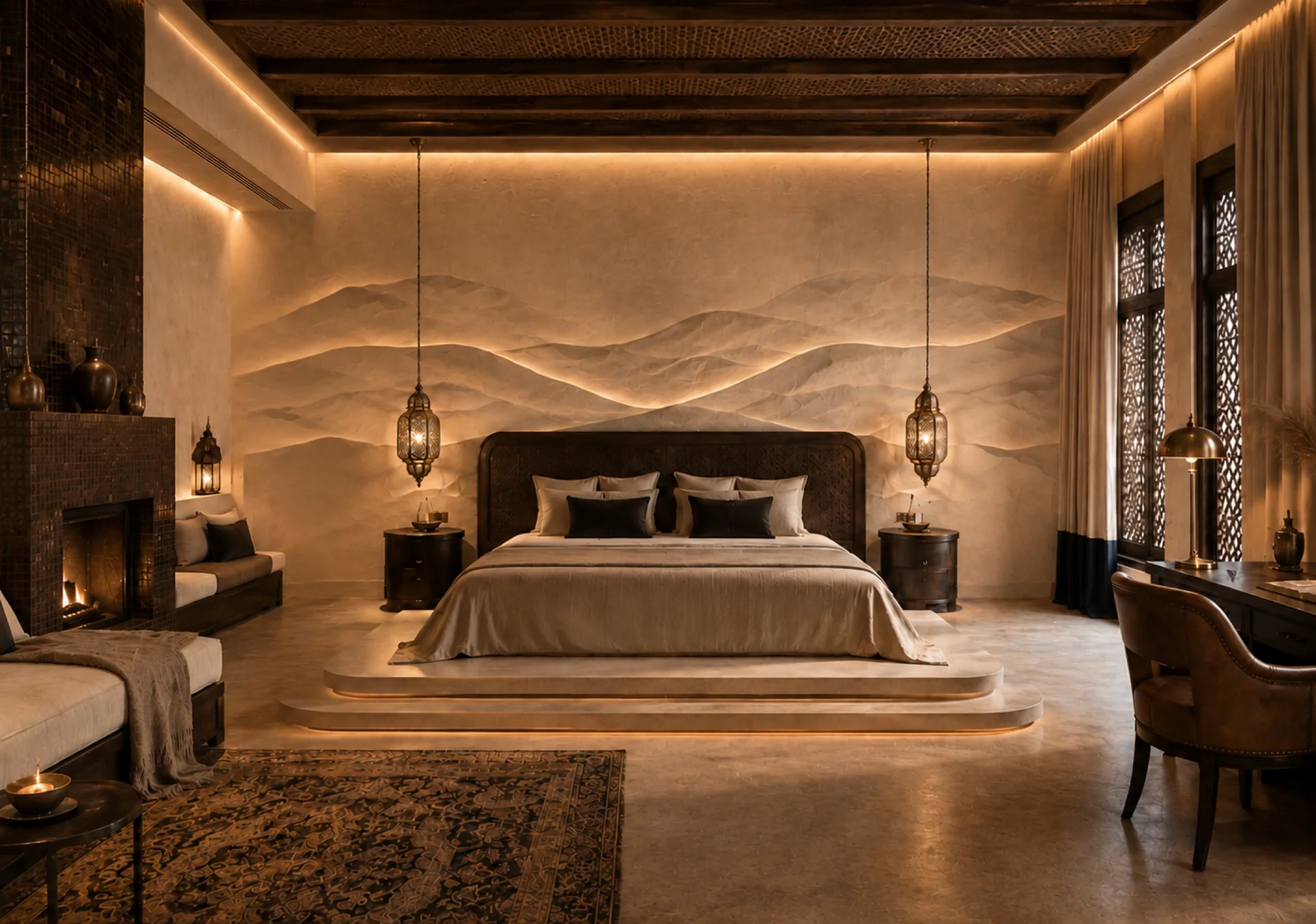
Click the photograph to explore the rooms at Kasbah Nelaria.
From €300,000 to €700,000 in profit: the ramp-up approach
The business plan does not assume maximum performance in the first year:
- Year 1 — €300,000: launch phase;
- Year 2 — €400,000: developing reputation and distribution;
- Year 3 — €500,000: developing the hospitality asset;
- Year 4 — €600,000: strengthening average rates and additional revenue;
- Year 5 — €700,000: target normal operating level.
The theoretical cumulative profit over the first five years would therefore reach €2.5 million. On paper, this exceeds the initial €2,000,000 reference acquisition price.
This does not mean the investment would automatically be repaid in under five years. All investment, taxation, any financing, cash requirements and differences between projected and actual operations must be considered.
Darnel’s communicated strategic objective is therefore to target overall recovery of the investment within a maximum of seven years, subject to achieving the project’s assumptions.
What does operating a ten-room boutique hotel cost?
Performance depends on more than revenue. Costs must be controlled.
For Kasbah Nelaria & Spa, the proposed operational structure notably includes:
- a manager;
- a night watchperson;
- four housekeepers;
- three cooks;
- two spa staff;
- two casual staff;
- a security or support position.
This represents a target organisation of around fourteen people.
The payroll budget still needs to be consolidated before opening: the supplied position breakdown represents approximately MAD 80,000 monthly, rather than MAD 70,000. This is a reminder that a hotel business plan must be regularly audited and recalculated.
Water, electricity, food, linen, Wi-Fi, maintenance, contingencies, marketing and advertising are additional costs. An extra annual allowance of around MAD 225,000 has been considered for certain non-payroll operating costs, alongside €250,000 in safety cash reserves.
These assumptions will naturally need to evolve with actual activity.
Why does the business plan target more than 20%?
With a reference acquisition base of €2,000,000 and target net profit of €500,000 in Year 3, the simple ratio reaches 25%.
- At €600,000: 30%;
- At €700,000: 35%.
These ratios explain Darnel’s objective of building an asset capable of exceeding a simple operating return of 20% at maturity.
Precise wording is essential: at maturity, the business plan targets profit exceeding 20% of the initial acquisition price. The project does not currently show a historical 20% return.
The real challenge: from €2,000,000 to a €3.5–€4 million asset
An investor buys more than the building. The ambition is gradually to create:
a property asset + an operating business + a brand + a clientele + a reputation.
Kasbah Nelaria’s proposed valuation scenario takes a reference acquisition base of €2,000,000 towards a potential future value of €3.5–€4 million.
- At €3.5 million: theoretical increase of €1.5 million, approximately 75%;
- At €4 million: theoretical increase of €2 million, approximately 100%.
This value is neither achieved nor guaranteed. It will depend on actual performance, asset quality, the property and hospitality markets, the brand created and resale conditions.
It nevertheless reveals an important principle: a performing hotel can create value through both profits and the asset’s own value.
Creating a hospitality brand rather than simply a riad
A property without identity is easily compared. Guests weigh price, location, rating, photographs and facilities.
A strong brand adds another dimension. A traveller may seek Kasbah Nelaria rather than simply a “riad in Marrakech”.
This shift from accommodation to brand can encourage:
- direct bookings;
- loyalty;
- recommendations;
- social media development;
- package sales;
- the business’s commercial value.
The aim is therefore to create a genuine distinctive boutique hotel.
Why is the hotel operator essential?
A perfectly renovated project can still underperform. Once works are complete, a second profession begins: operations.
This is precisely Darnel Hospitality’s role. The operator must have an interest in developing revenue, ADR, occupancy, direct sales, additional revenue, guest satisfaction and profitability.
Management therefore involves more than organising cleaning, arrivals and breakfasts. It must also address:
- revenue management;
- distribution;
- marketing;
- direct bookings;
- guest experience;
- upselling;
- reporting;
- financial performance.
Seven pillars of the Kasbah Nelaria model
1. Target profitability above 20%
As operations develop and subject to achieving the business plan’s objectives.
2. Five revenue streams
Overnight stays, spa, dining, additional sales and All In packages.
3. Asset appreciation
An indicative objective taking a €2,000,000 base towards a potential value of €3.5–€4 million.
4. Progressively increasing profit
From €300,000 in Year 1 towards a target of €700,000 in Year 5.
5. Professional hotel management
The building becomes a genuine operating asset.
6. A distinctive boutique hotel
The product must become sufficiently differentiated to avoid being reduced to a simple price comparison.
7. Creating a hospitality brand
The ultimate aim is for the brand itself progressively to contribute to the project’s value.
Questions to ask before investing in a boutique hotel
Before focusing solely on stated returns, ask:
- What is the actual total capital invested?
- What ADR is needed to achieve the objectives?
- What occupancy is assumed?
- What share of revenue comes from rooms?
- Which other revenue streams exist?
- What are operating costs?
- What safety cash reserves are planned?
- Who will operate the property?
- How will performance be measured?
- Is there a conservative scenario?
- What value might the asset retain if it underperforms?
Answering these questions takes you from a commercial promise to genuine investment analysis.
Frequently asked questions about boutique hotel investment
What profitability can a boutique hotel in Marrakech generate?
There is no standard profitability. It depends on acquisition price, works, room count, ADR, occupancy, additional revenue and costs. In Kasbah Nelaria’s business plan, the €500,000 target for Year 3 represents approximately 25% of the €2,000,000 reference acquisition price. This ratio is projected and partial.
How many rooms are planned for Kasbah Nelaria & Spa?
The project is structured around a ten-room boutique hotel.
What are its revenue streams?
Five main streams are envisaged: overnight stays, spa, dining, additional sales and All In packages.
What is the profit target?
The scenario presented envisages growth from €300,000 in Year 1 to €700,000 in Year 5. These are projected objectives, not guaranteed results.
Why include a spa in the project?
The spa enriches the guest experience and can generate additional revenue during the stay.
Why create a hospitality brand?
A brand can differentiate the property, develop direct bookings, encourage loyalty and contribute to the business’s commercial value.
What is the valuation objective?
The strategic scenario targets an increase from a €2,000,000 acquisition base to a potential €3.5–€4 million valuation. This assumption depends on actual performance and future market conditions.
Continue your investor journey
- Invest — Investing in a riad in Marrakech in 2026
- Profitability — What profitability can you expect from a riad in Marrakech?
- Budget — What costs should you allow when buying a riad?
- Transformation — What does riad renovation cost in Marrakech?
Conclusion: from property to hospitality asset
Kasbah Nelaria & Spa illustrates the vision Darnel Collection aims to develop in Marrakech: acquiring more than a riad and creating a ten-room hospitality asset built around five revenue streams.
The projected model targets an average rate progressing from €150 to €350, net profit growing from €300,000 to €700,000, professional operations, a brand and a potential future valuation between €3.5 million and €4 million.
Its potential therefore rests on a combination of factors:
Property + hospitality + experience + revenue + brand.
This combination can help transform a traditional property investment into a distinctive hospitality asset.
About Darnel Collection
Darnel Collection takes a comprehensive approach to riad and boutique hotel projects in Marrakech, from investment assessment to design, positioning and enhancing project value.
Darnel Hospitality handles hotel operations to develop marketing, revenue and guest experience for the properties it supports.
Darnel Collection — Invest. Transform. Operate.
The Kasbah Nelaria & Spa data presented in this article reflects the project’s communicated assumptions and projected objectives. It is neither historical performance nor a guarantee of profit, returns or future valuation. Every investment decision must consider all project-specific costs, risks and tax, legal and financial aspects.
Also read
Explore further
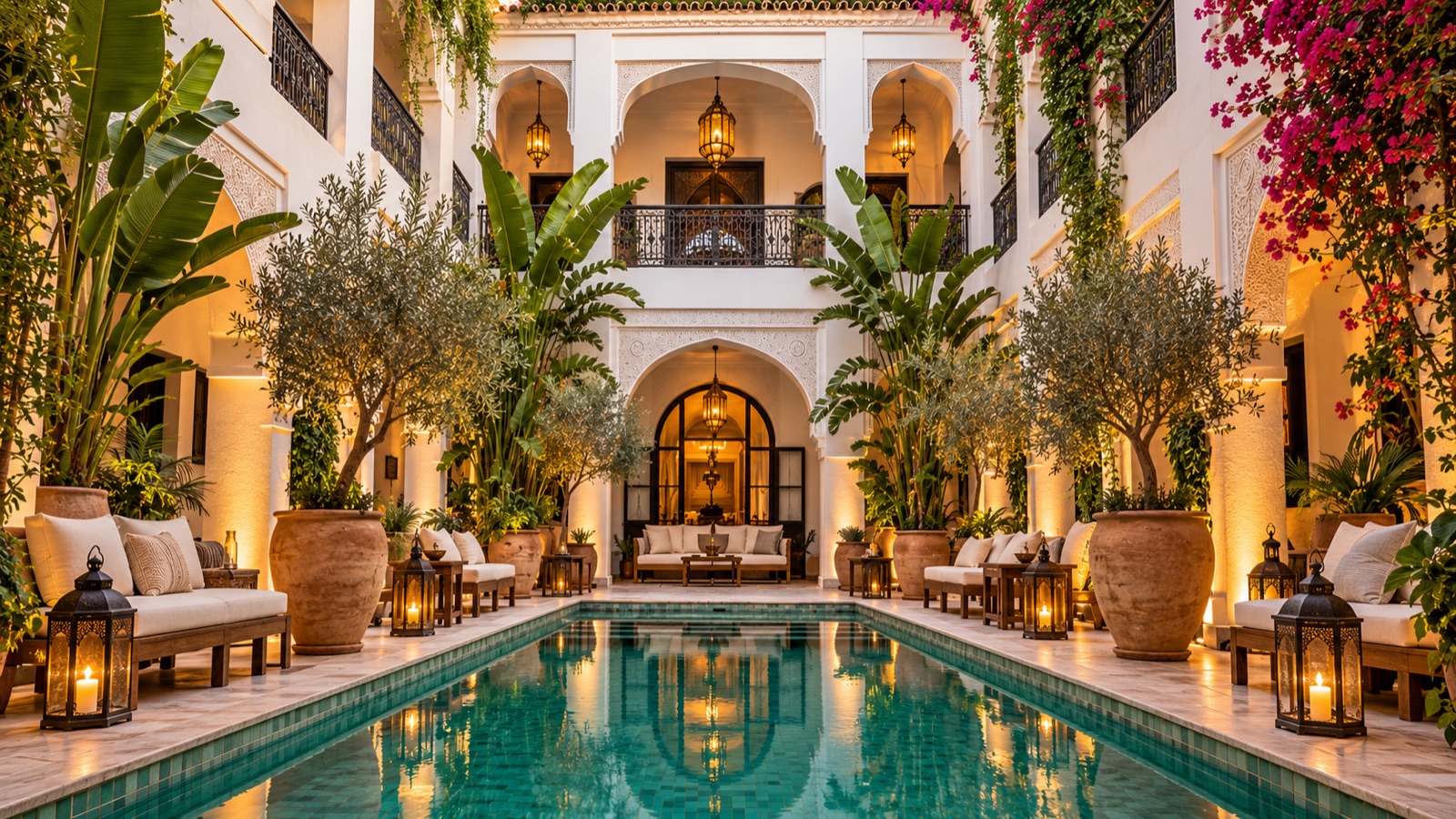
Riad profitability · 18 September 2026 · 11 min
What profitability can you expect from a riad in Marrakech? Calculations, figures and 2026 examples
ADR, occupancy, RevPAR, costs and additional revenue: three scenarios for assessing a riad’s potential profitability in Marrakech.
Read the article →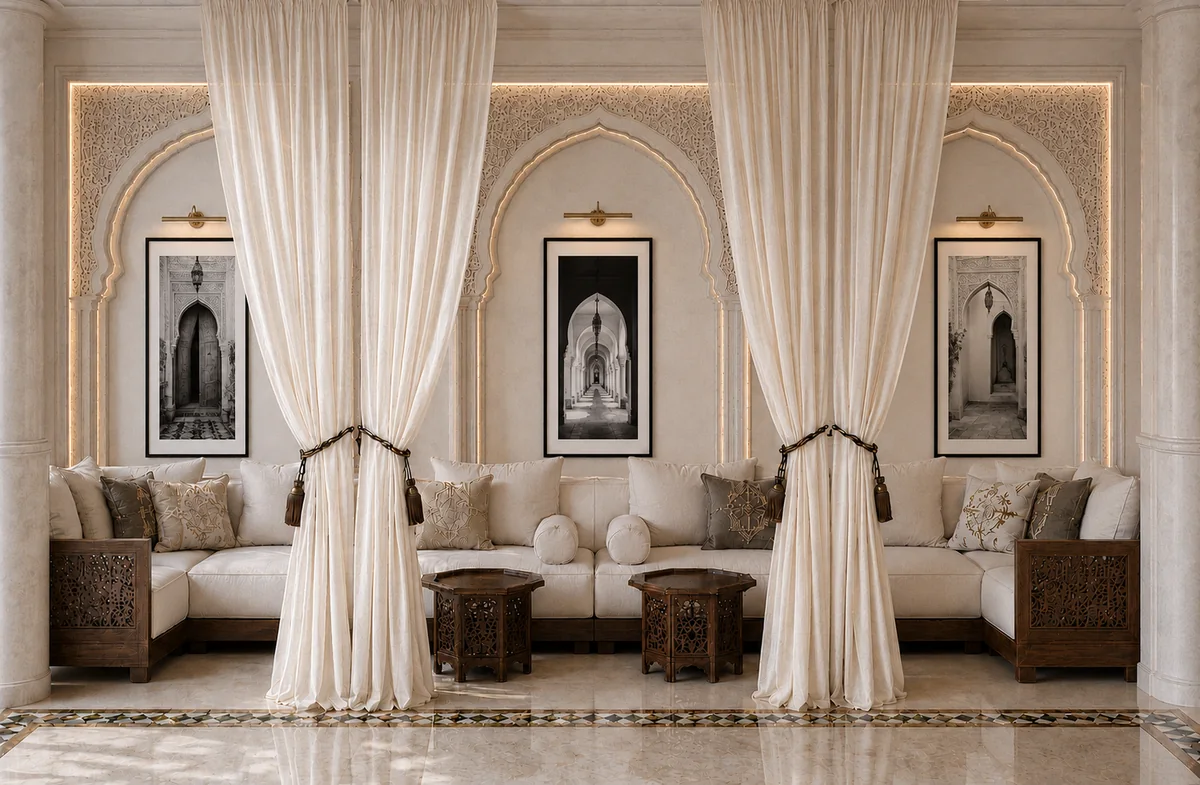
Property investment in Marrakech · 17 September 2026 · 22 min
Investing in a riad in Marrakech in 2026: the complete guide
From purchase to operations, explore the criteria, figures, risks and levers involved in turning a riad into a performing hospitality asset.
Read the article →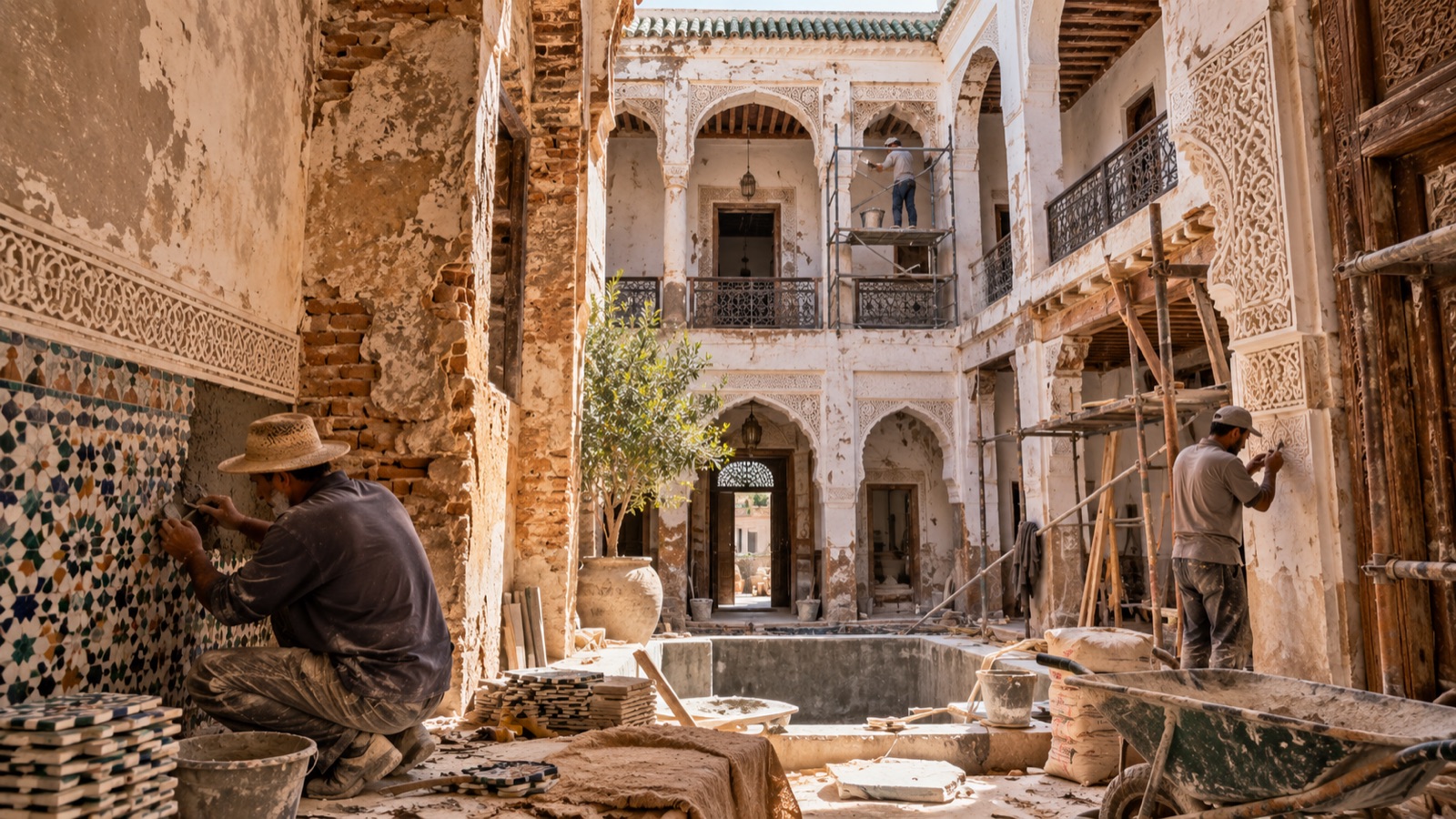
Renovating and creating a riad · 18 September 2026 · 11 min
How much does it cost to renovate a riad in Marrakech? Prices, budgets and advice for 2026
Costs per m², structure, craftsmanship, equipment and contingencies: build a realistic budget to transform a riad in Marrakech.
Read the article →