
Riad profitability
Riad, guesthouse or boutique hotel in Marrakech: which investment model should you choose?
Three properties may look alike while representing very different investments. Compare their capital requirements, organisation and objectives.
Choosing between a riad, guesthouse and boutique hotel requires two separate analyses: the business model and the applicable regulatory category. This article’s five-, seven- and ten-room scenarios do not determine that category on their own. Compare total capital, fixed costs, services and target guests; then have the programme’s feasibility checked. The budgets and results shown are simulations, not observed market performance.
For authorisations and classification, consult the Ministry of Tourism’s official framework. To compare each model with your capital and costs, continue with the total investment budget and the operating costs analysis.
Three properties may look alike… while representing three very different investments
Imagine visiting three properties in the Marrakech Medina.
The first has five rooms around a courtyard, a plunge pool and a rooftop where guests have breakfast. The atmosphere is intimate. The owner often knows their guests personally.
The second has seven rooms, a permanent team, a dining area and an organisation capable of welcoming guests throughout the year.
The third has ten rooms, a spa, a restaurant, a distinct brand identity and several teams working together to deliver the same hospitality experience.
To the traveller, all three properties may look like riads.
To the investor, however, they represent three very different business models.
The first relies mainly on selling room nights and providing a personalised experience. The second seeks a better balance between the number of rooms, fixed costs and services. The third aims to develop a hospitality business capable of generating revenue well beyond accommodation.
This distinction goes beyond marketing. In Morocco, Law No. 80-14 on tourist establishments distinguishes, among others, the categories of riad, guesthouse and hotel. A riad refers to Moroccan architectural and decorative characteristics, while guesthouses and hotels have their own definitions and regulatory requirements. The commercial term “boutique hotel” does not, on its own, replace an administrative category. Read the reference text of Law 80-14.
In other words, your chosen model influences the building you buy, the authorisations you check, the capital you need, the teams you recruit and the financial performance you can reasonably target.
To understand these differences, let us compare three investment scenarios: a five-room riad, a seven-room guesthouse and a ten-room boutique hotel.
| Model | Budget excluding acquisition fees |
|---|---|
| Riad · 5 rooms | €455,000 |
| Guesthouse · 7 rooms | €682,000 |
| Boutique hotel · 10 rooms | €2,000,000 |
1. The 5-room riad: starting with a small hospitality asset
Atmosphere illustration.
This is often the model that attracts investors discovering Marrakech.
A traditional house, a courtyard, four or five rooms, a rooftop, a small team and a close relationship with guests.
The concept seems simple.
But this type of property has a particular economic feature: each room represents a substantial share of its sales capacity.
With five rooms, a single unavailable room immediately accounts for 20% of the inventory.
An air-conditioning breakdown, maintenance work or a room that is difficult to sell can therefore have a significant effect on revenue.
What budget should you allow for a five-room riad?
Let us build a first scenario.
We assume the purchase of a riad requiring improvement work, consistent decoration and preparation for tourism operations.
| Item | Estimated budget |
|---|---|
| Purchase | €300,000 |
| Renovation and improvements | €82,000 |
| Furniture and decoration | €32,000 |
| Equipment and launch | €18,000 |
| Cash reserve | €23,000 |
| Total investment (excluding acquisition fees) | €455,000 |
Amounts are rounded from the initial scenario. This budget excludes acquisition fees; it is neither a quotation nor an average market price. Any costs not covered must be checked separately.
How much could this riad generate?
Let us start with three assumptions:
- 5 saleable rooms;
- an average rate of €136 per room per night;
- an occupancy rate of 62%.
Annual room revenue would be around €154,000.
If transfers, meals and experiences add 8% in extra revenue, total revenue would reach approximately €166,000.
Assuming a hypothetical operating margin of 25%, operating profit would be close to €41,600 per year.
This represents an indicative operating return of around 9.2% of initial capital, before the financing and tax items that are not modelled here.
It is essential to understand that this profit is not necessarily the amount available to the owner. Operator remuneration, equipment replacement, loan interest, depreciation and tax can affect the cash actually received.
Five-year projection
| Year | Estimated revenue | Simulated operating profit |
|---|---|---|
| 1 | €166,000 | €41,600 |
| 2 | €176,000 | €44,100 |
| 3 | €186,000 | €46,600 |
| 4 | €196,000 | €49,100 |
| 5 | €206,000 | €51,600 |
| Total | €930,000 | €233,000 |
In this simulation, cumulative operating profit over five years would represent around 51% of initial capital.
This does not mean that 51% of the capital would necessarily have been repaid in cash. It is an indicative ratio before financing, tax and additional investment.
Who is this model suited to?
A five-room riad can be particularly suitable for an investor seeking an intimate property, wishing to maintain a personalised relationship with guests and favouring a relatively lean organisation.
It can also support a premium positioning when the limited number of rooms is offset by a superior guest experience.
However, opportunities for economies of scale remain limited. Fixed costs must be managed very carefully.
For more detail, read our guide to the budget needed to invest in a riad in Marrakech.
2. The 7-room guesthouse: moving from investment to business
With seven rooms, the project gradually changes scale.
The property can accommodate more guests, spread certain fixed costs across more room nights and develop complementary services more consistently.
But the organisation also needs structure.
Housekeeping, breakfast, late arrivals, maintenance, bookings and revenue management require daily coordination.
The owner is no longer simply operating a beautiful house.
They are running a small hospitality business.
What budget for a seven-room guesthouse?
Let us consider a building to reposition, partial renovation and equipment suited to an international clientele.
| Item | Estimated budget |
|---|---|
| Purchase | €455,000 |
| Renovation and repositioning | €109,000 |
| Furniture and decoration | €45,000 |
| Professional equipment | €23,000 |
| Pre-opening and marketing | €18,000 |
| Working capital | €32,000 |
| Total investment (excluding acquisition fees) | €682,000 |
The €682,000 investment excludes acquisition fees and remains higher than in the first model.
But the property also has two additional rooms, which may improve its ability to absorb certain costs.
Revenue simulation
Assume an average nightly rate of €159 and occupancy of 66%.
Across seven rooms, annual accommodation revenue would reach approximately €268,000.
Adding 12% for dining, transfers and additional sales would bring total revenue close to €300,000.
If operating profit represents 29% of revenue in our educational assumption, the result is approximately:
Simulated annual operating profit: €87,000.
That is around 12.8% of initial capital, before the financing and tax adjustments not modelled here.
The economic improvement over the five-room riad does not come solely from the two additional rooms.
It also comes from the ability to develop a more structured sales organisation, spread certain costs and increase revenue per guest.
The guesthouse’s five-year projection
| Year | Estimated revenue | Simulated operating profit |
|---|---|---|
| 1 | €300,000 | €87,000 |
| 2 | €318,000 | €92,700 |
| 3 | €338,000 | €101,800 |
| 4 | €359,000 | €110,900 |
| 5 | €382,000 | €118,200 |
| Total | €1,697,000 | €510,600 |
Cumulative operating profit would represent around 75% of initial capital in this scenario.
This difference from the five-room riad is interesting, but it must not be considered automatic.
A poorly marketed seven-room guesthouse can generate less profit than a very well-positioned five-room riad.
Why two additional rooms can change the project’s economics
Take a fixed annual management cost of €11,000, purely for illustration.
| Capacity | Annual management cost per room |
|---|---|
| 5 rooms | €2,200 |
| 7 rooms | €1,571 |
| 10 rooms | €1,100 |
The same principle applies partly to software, some marketing expenses, the website and certain administrative functions.
However, more rooms also mean more linen, consumables, maintenance and potentially staff.
Economies of scale are therefore real only if the additional rooms generate enough revenue to cover their costs.
Unsure whether to choose a 5-room riad or a larger guesthouse?
At this point, the difference between the two models extends beyond the purchase price.
You need to compare total capital, accommodation capacity, achievable average rates, staffing costs, additional revenue and operating complexity.
Darnel Collection offers an advisory appointment to compare your budget with several investment scenarios in Marrakech.
The aim is to determine which type of property best fits your project before selecting a building.
ANALYSE MY PROJECT WITH DARNEL COLLECTION →
3. The 10-room boutique hotel: building a brand and several profit centres
With ten rooms, an upscale positioning, a spa and dining services, the model changes substantially.
The investor is no longer looking only to sell room nights. They want to develop a complete hospitality experience and build a recognised brand.
Rooms are the first driver of revenue. But they can be complemented by treatments, dining, private experiences, transfers, excursions, events and all-inclusive stays.
This diversification has a major advantage: increasing average spending per guest without necessarily increasing the number of rooms.
Consider two ten-room properties with comparable accommodation revenue.
The first sells almost nothing but room nights.
The second succeeds in offering guests a massage, a private dinner, an airport transfer and an exclusive experience during their stay.
Even with the same occupancy rate, the second can generate more revenue.
But this strategy has a counterpart. Every new activity also creates costs, responsibilities and operational requirements.
A spa generating €150,000 in annual revenue does not produce €150,000 in profit. Practitioners must be paid, consumables purchased, equipment maintained, services marketed and operating costs covered.
Diversification must therefore be assessed according to the margin it generates, rather than its revenue alone.
Darnel Collection investment case — Kasbah Nelaria & Spa
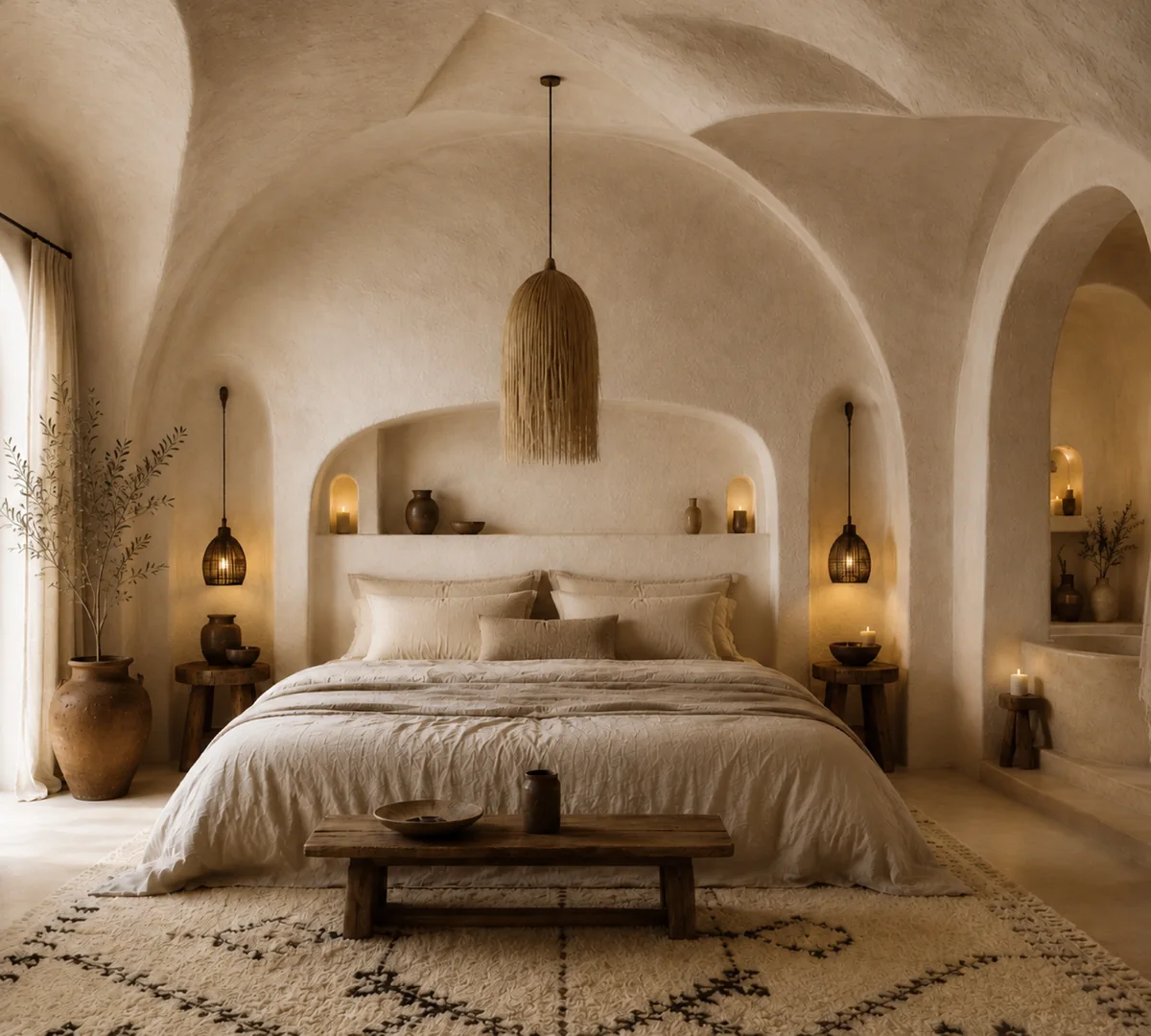
How do you move from an average nightly rate of €150 to €350?
Kasbah Nelaria’s business plan provides for a progressive move upmarket in the average room rate:
Target ADR progression
Average rate per room per night, in euros.
Target ADR: from €150 to €350 per room per night over five years, not guaranteed.
Such a progression cannot be achieved simply by raising rates on Booking.
It requires the gradual development of the property’s reputation, perceived quality, guest reviews, partnerships, direct bookings and ability to attract guests willing to pay more.
This is a substantial hospitality positioning exercise.
Can the spa and dining transform the business model?
The project also sets complementary commercial targets.
| Activity | Daily target | Theoretical annual revenue over 300 days |
|---|---|---|
| Spa | €500–1,000 | €150,000–300,000 |
| Dining | €300–900 | €90,000–270,000 |
These amounts are theoretical gross targets, assuming 300 operating days at the stated level. They represent neither observed results nor profits.
Additional sales may also contribute, with an assumption of €30–100 per guest, alongside packages and private experiences.
The aim is to turn the boutique hotel into a destination in its own right, where guests book a complete experience rather than just a room.
The three models compared: capital and economic structure
This is a summary of the three models and their reference capital, excluding acquisition fees. The operating simulations for the five- and seven-room properties and Kasbah Nelaria’s net profit targets use different methodologies: comparing them as equivalent returns would be misleading.
| Characteristic | Riad · 5 rooms | Guesthouse · 7 rooms | Boutique hotel · 10 rooms |
|---|---|---|---|
| Reference budget (excluding acquisition fees) | €455,000 | €682,000 | €2,000,000 |
| Capacity | 5 rooms | 7 rooms | 10 rooms / suites |
| Positioning | Intimate, personalised experience | Structured tourism business | Upscale, brand identity |
| Services | Accommodation, breakfast, additional services | Accommodation, dining, transfers, additional sales | Premium accommodation, spa, dining, experiences and packages |
| Organisation | Small team, strict fixed-cost control | Permanent team, daily coordination | Several teams, professional management |
| Key consideration | One unavailable room = 20% of inventory | Economies of scale depend on additional revenue | Each profit centre creates its own costs and responsibilities |
Simulated operating results: the 5- and 7-room models only
| Year | Riad · 5 rooms | Guesthouse · 7 rooms |
|---|---|---|
| 1 | €41,600 | €87,000 |
| 2 | €44,100 | €92,700 |
| 3 | €46,600 | €101,800 |
| 4 | €49,100 | €110,900 |
| 5 | €51,600 | €118,200 |
| Five-year total | €233,000 | €510,600 |
Financial interpretation: operating results are educational simulations, before financing and tax. They represent neither net profits, distributable cash flows nor capital repayment. Kasbah Nelaria’s net profit targets appear in a separate block: forecast targets are not guaranteed and cannot be directly compared with the operating results of the other two models.
This distinction matters: an investment of €455,000 with simple operations does not carry the same risks or obligations as a €2,000,000 boutique hotel.
The aim of this table is not to automatically identify the most profitable model.
It is to show that the capital committed must be consistent with the commercial ambition and available operating skills.
5. Calculate the profitability of your own project
The three scenarios above help explain differences in scale.
But none will match your situation exactly.
You may be considering a six-room riad, an eight-room guesthouse or a twelve-suite boutique hotel. Your purchase price, renovation requirements and target clientele will differ.
That is why the best way to extend this comparison is to calculate your own assumptions.
DARNEL COLLECTION INVESTOR TOOL
Estimate your riad’s profitability
Loading exchange rates…
Rates provided by ExchangeRate-API · Updated daily ·
Occupancy: +5 percentage points/year up to 90%, then +2.5 percentage points/year up to 95%.
Estimate based on the purchase price alone. Renovation costs, acquisition fees and financing are excluded from the return calculation.
Your 5-year projection
Version 4 · Exchange rates updated daily · Updated on 6 October 2026
| Year | Occupancy | Nightly rate | Additional sales | Annual revenue | Operating profit | After corporate tax | Return |
|---|
Understanding the assumptions and calculations
Operating profit is set at 45% of total revenue, meaning total operating expenses are estimated at 55%. Corporate tax is simulated at 20% of positive operating profit, without modelling depreciation, deductions or the project’s specific tax regime. Profit after corporate tax is not a calculation of cash flow after financing.
The average room rate per night increases by 7.5% per year, compounded. Occupancy increases by 5 percentage points per year up to 90%, then by 2.5 percentage points per year up to 95%: 60%, 65%, 70%… 90%, 92.5%, 95%. Additional sales increase by 5 percentage points per year up to 30% of room revenue, then by 2.5 percentage points per year, with no projection cap. If an increase crosses a threshold, it stops at that threshold for the year in question (examples: 88% → 90%; 28% → 30%). The operating margin remains constant.
The return equals annual profit after corporate tax divided by the purchase price. No return on equity is calculated. Owners may replace the purchase price with the reference value they wish to analyse.
Indicative conversions are updated automatically from ExchangeRate-API, with a 24-hour local cache. The rates’ publication date is displayed above the inputs. If the service is unavailable, the latest available rates are retained and flagged. Current rates are used to convert all projection years; they do not predict future exchange rates. Displayed amounts are rounded; calculations use unrounded values.
Indicative, non-binding simulation. These assumptions do not guarantee future performance or the applicable tax treatment.
Give your riad the means to achieve these results
Discuss your project and the drivers of its profitability with Darnel Hospitality.
Book an advisory appointmentHow should you interpret the simulator’s results?
Suppose your central scenario produces a satisfactory return.
Before making a decision, reduce occupancy by ten percentage points. Then lower your average room rate by 15%. Finally, check the effect of an increase in the capital required for purchase and renovation.
A project may look very attractive at 75% occupancy and become much less appealing at 55%.
The simulator’s value therefore lies beyond the result it displays.
It lies in its ability to help you understand what could weaken your investment.
Which model requires the most day-to-day work?
A profitability table never shows the full complexity of operations.
With five rooms, you can design a relatively lean organisation. Services are often focused on accommodation, breakfast and a few additional offerings.
At seven rooms, procedures become more important. Staffing schedules, bookings, maintenance, quality control and sales monitoring need structure.
At ten rooms with a spa and restaurant, you manage several activities in parallel.
Each activity has its own indicators.
Accommodation is monitored through occupancy, ADR and RevPAR.
Dining must be analysed through revenue, purchases, margins and staffing costs.
The spa requires monitoring of bookings, practitioner productivity, average spend and consumables.
Sales require an understanding of OTA commissions, the share of direct bookings, customer acquisition costs and loyalty.
Owners wishing to delegate must therefore include professional management costs in their model.
For more detail, our article on operating a tourist riad in Marrakech is a natural companion to this guide.
Why does distribution become strategic?
Imagine two properties, each generating €300,000 in room revenue.
The first receives 80% of its bookings through platforms, at a hypothetical average cost of 18%.
Its commissions therefore amount to:
€300,000 × 80% × 18% = €43,200 per year.
The second has developed a larger share of direct bookings through its website, past guests, social media and partners.
It may reduce part of these commissions, even though it must fund its own sales and marketing activities.
This reasoning explains why a strong brand and a distribution strategy are economic assets, rather than merely marketing expenses.
For owners wishing to improve operations, Darnel Hospitality offers an appointment focused on hospitality performance and sales.
DISCUSS YOUR PROJECT WITH DARNEL HOSPITALITY →
What regulatory framework applies to a riad, guesthouse or boutique hotel?
Before buying a building intended for tourist accommodation, you must check the project’s administrative feasibility.
A beautiful riad is not automatically suitable for operating under your intended model.
Moroccan regulations govern tourist accommodation establishments, notably through Law No. 80-14 and operating classification procedures.
The choice of category may affect equipment, services, operating conditions and classification requirements.
You must also examine land-title status, applicable authorisations, renovation possibilities, safety and building compliance.
A ten-room project with dining and a spa requires a specific assessment. It would be risky to assume that a building authorised for one use can automatically accommodate every planned activity.
Before signing, therefore, compare the architectural project with the accommodation category and authorisation regime that actually apply.
You can consult the Moroccan Ministry of Tourism’s operating classification procedures.
The location must suit the hospitality model
Atmosphere illustration.
A five-room riad and a ten-suite boutique hotel do not necessarily need the same building or surroundings.
For a small, intimate property, the courtyard’s charm, peace and quiet, and room quality can play a major role.
For a seven-room guesthouse, accessibility, logistics, ease of operation and proximity to key attractions become particularly important.
For an upscale boutique hotel, the location must also support rate positioning, the guest experience and the services offered.
A project with a spa, restaurant and several teams must anticipate deliveries, circulation routes and everyday operating constraints.
That is why we recommend defining the concept before choosing the building.
The ideal neighbourhood is not necessarily the best-known or most expensive. It is the one best suited to the product you want to develop.
What if your investment were part of a new life in Morocco?
For some investors, buying a riad is an asset-building transaction.
For others, it accompanies a wider ambition: settling in Morocco, starting a business, changing their life or developing a tourism activity in Marrakech.
These projects deserve consideration beyond property profitability alone.
They involve professional, tax, family and wealth-planning choices.
This is also the subject of the book:
Réussir sa nouvelle vie au Maroc : Le guide pratique pour s’installer, investir et prospérer — “Making a success of your new life in Morocco: a practical guide to settling, investing and thriving.”
This guide broadens the discussion to settling, investment and entrepreneurship in Morocco.
DISCOVER THE BOOK ON AMAZON →
Which model should you choose for your investor profile?
After studying the figures, one essential question remains: what kind of business do you actually want to own?
The 5-room riad
Suited to an intimate project, with more limited capital, a personalised experience and relatively simple organisation. Cost control and sound positioning remain essential.
The 7-room guesthouse
Suitable for an investor wishing to build a structured tourism activity, spread fixed costs more widely and gradually develop additional revenue.
The 10-room boutique hotel
Intended for a more ambitious entrepreneurial project combining a brand, premium accommodation, spa, dining and professional management. It requires more capital and expertise.
There are, naturally, exceptions.
A very upscale five-room riad can be more profitable than a poorly operated seven-room guesthouse.
Similarly, a ten-room boutique hotel does not automatically justify an investment of several million euros.
The decision must always start with the relationship between capital committed and realistic economic potential, rather than the number of rooms alone.
The Darnel Collection Private Investors Club
Would you like to keep understanding the market before committing your capital?
The Darnel Collection Private Investors Club gives access to analyses, case studies, projects and resources dedicated to investment in riads and boutique hotels in Marrakech.
You can explore budgets, acquisition strategies, renovation and operations in greater depth while discovering projects developed by Darnel Collection.
JOIN THE PRIVATE CLUB FOR FREE →
Free access. You can unsubscribe at any time.
FAQ Riad, guesthouse or boutique hotel in Marrakech
What is the difference between a riad and a guesthouse?
In Morocco, the two terms correspond to distinct regulatory categories. A riad is characterised, in particular, by traditional Moroccan architecture and decoration, while a guesthouse has its own definition. The category and classification conditions applicable to the project must be checked.
What budget is needed to invest in a five-room riad?
Our educational scenario assumes around €455,000 in initial investment, excluding acquisition fees. This is not a universal market price. The actual cost depends on the neighbourhood, property, renovation, floor area and positioning.
Is a seven-room guesthouse more profitable?
Not automatically. It may spread certain fixed costs more efficiently and sell more room nights, but it also requires more staff, maintenance and organisation. Profitability depends on the price paid and the performance actually achieved.
How much can a ten-room boutique hotel in Marrakech generate?
Results can vary considerably. Kasbah Nelaria & Spa uses progressive net profit targets of €300,000–700,000 per year over five years. These are business-plan targets, not observed results or a benchmark applicable to every property.
Can a spa really increase profitability?
Yes, provided there is sufficient demand and the margin generated covers the activity’s specific costs. A spa can increase guests’ average spend, but its revenue must not be confused with its profit.
Which model is easiest to manage remotely?
A small property with few services is generally less complex than a boutique hotel with dining and a spa. However, the quality of the local team, procedures and reporting may matter more than the number of rooms.
Can any riad be converted into a boutique hotel?
No. The building must allow the necessary alterations, and the project must comply with applicable technical, administrative and regulatory requirements.
Should you choose the hospitality model before buying the building?
This is strongly recommended. The number of rooms, service areas, kitchen, rooftop, spa and circulation routes depend on the building. Buying before defining the model may force you to revise the business plan.
Continue your investment journey
To complement this article, here are three relevant reads from the Darnel Collection Journal.
What budget should you allow to invest in a riad in Marrakech?
Compare seven investment scenarios and the implications of the budget for your project.
Renovate or buy a turnkey riad: which strategy should you choose?
Understand how renovation, timelines and value creation affect your investment.
How much can a 5-, 7- or 10-room riad generate?
Study different revenue assumptions according to capacity and positioning.
Conclusion: the best investment is not necessarily the largest property
The temptation is natural.
With five rooms, you already imagine owning seven.
With seven rooms, you consider ten suites, a spa and a restaurant.
But every change of scale profoundly changes the project.
It changes the capital needed, teams, costs, clientele, sales and essential skills.
A five-room riad can be an excellent investment when it has a clear positioning, a sensible purchase price and well-managed operations.
A seven-room guesthouse can offer an interesting balance between accommodation capacity and organisation.
A ten-room boutique hotel can open the way to a more ambitious hospitality business, with several revenue sources and a brand capable of developing.
None of these models is automatically superior.
At Darnel Collection, we therefore favour a simple approach:
Define the clientele first, then the concept, business model and budget. Next, find the building capable of accommodating the project.
Because the best investment is not the riad with the most rooms.
It is the one that allows you to create the hospitality asset most consistent with your capital, ambition and operating capacity.
Have a budget or a riad project in Marrakech? Let us look at your numbers.
Do you already have an investment budget, have you identified a property, or are you hesitating between several models?
During an advisory appointment with Darnel Collection, we can assess your project against its main assumptions: purchase price, renovation, number of rooms, achievable ADR, occupancy, additional revenue, operations and valuation potential.
The aim is to help you structure your thinking and identify the points to investigate before committing your capital.
ANALYSE MY PROJECT WITH DARNEL COLLECTION →
Discuss your project on WhatsApp
About the author
Georges Lelièvre — Founder, Darnel Group
Through Darnel Collection and Darnel Hospitality, Georges Lelièvre develops an approach to investment in riads and boutique hotels in Marrakech that combines real estate, hospitality concept creation, sales and operations.
His approach is not simply to acquire a building, but to determine which hospitality model can turn that asset into a sustainable business.
Financial simulations are provided for educational purposes. The first two models rely on revenue and margin assumptions. Kasbah Nelaria & Spa’s data correspond to forecast targets, rather than historical performance. Euro conversions are indicative. Every investment requires an appropriate legal, technical, tax and financial assessment.