
Marrakech & Medina
Investing in Marrakech’s Kasbah in 2027: riad prices, competition and returns — Market study
Should you invest in a riad in Marrakech’s Kasbah in 2027? What budget should you allow for a four- or six-room riad with a spa? And how much revenue could a ten-suite boutique hotel with a restaurant and spa open to outside guests generate?
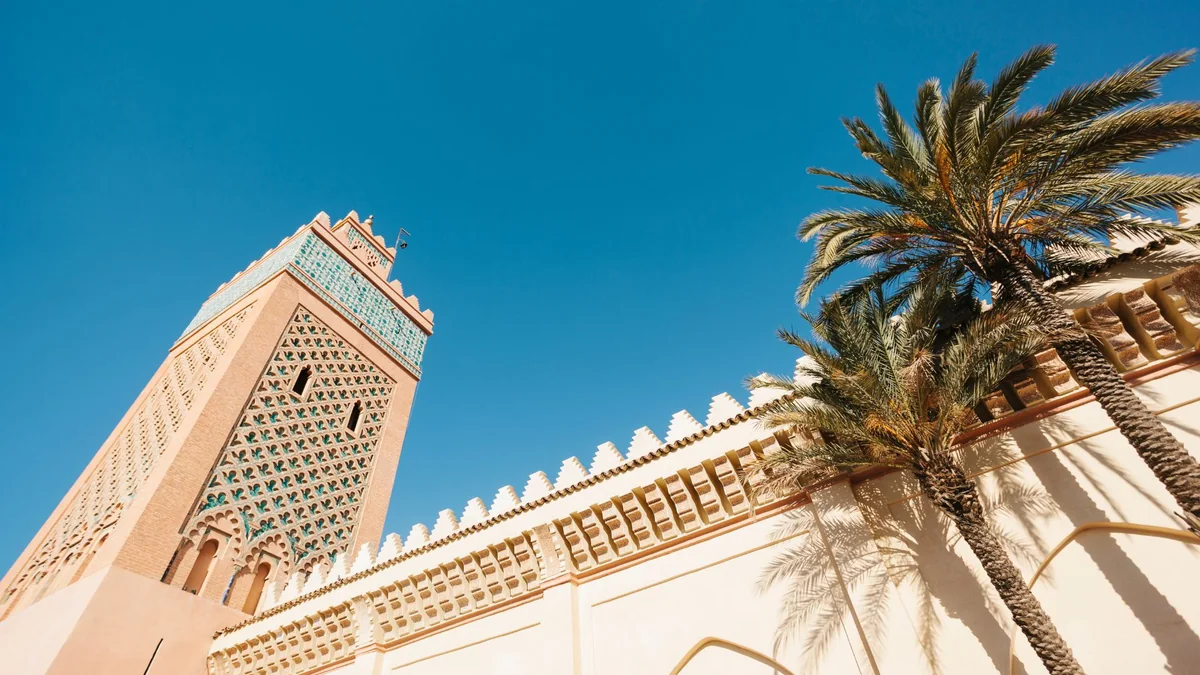
Should you invest in a riad in Marrakech’s Kasbah in 2027? What budget should you allow for a four- or six-room riad with a spa? And how much revenue could a ten-suite boutique hotel with a restaurant and spa open to outside guests generate?
South of the Medina, the Kasbah is one of Marrakech’s historic neighbourhoods worth considering for a tourist accommodation business.
It combines three major assets: remarkable architecture, proximity to landmark monuments and an established presence of upscale hotels.
Investing in the Kasbah does not, however, guarantee a good deal.
Acquisition prices vary considerably, competition is established, and returns depend as much on the hotel concept as on the location.
At Darnel Collection, we study this neighbourhood for distinctive riads with spas and boutique hotels designed to combine architectural quality with operating performance.
This preparatory market study for 2027 examines the Kasbah’s history, appeal, property prices, competition and three five-year investment models.
Marrakech’s Kasbah: a royal neighbourhood steeped in history
The Kasbah is closely connected to Marrakech’s political history.
Founded by the Almoravids in the eleventh century, the city subsequently went through several phases of development.
In the twelfth century, the Almohads established a substantial fortified palace complex south of the city. The Kasbah became a centre of power.
The monumental Bab Agnaou gate, the ramparts and the nearby royal palace still bear witness to this past.
Under the Saadians in the sixteenth and seventeenth centuries, the area enjoyed renewed prominence. The Saadian Tombs and El Badi Palace remain important reminders of that period.
Marrakech’s Medina, which includes the Kasbah, has been a UNESCO World Heritage Site since 1985. Source: UNESCO.
Property references and commercial offers checked on 6 November 2026. The 2027–2031 scenarios are Darnel assumptions, not guaranteed results.
Which development trends should investors watch in 2027?
Three trends deserve investors’ attention.
Heritage conservation. Restoring monuments and rehabilitating historic buildings remain important, particularly following the 2023 earthquake.
The move towards higher-quality accommodation. Premium riads, spas and luxury hotels contribute to the neighbourhood’s tourism offer.
Improving the visitor experience. Access, pedestrian routes and public spaces influence a property’s appeal.
Building a business plan on assumed property appreciation or unconfirmed urban projects would nevertheless be unwise.
Our analysis: the Kasbah’s primary advantage lies in its existing heritage, identity and proximity to tourist attractions.
Ten experiences in and around the Kasbah
The Kasbah offers a real commercial advantage: guests can discover part of Marrakech’s heritage on foot.
Ten experiences to include in a riad’s commercial narrative:
- Visit the Saadian Tombs.
- Admire the monumental Bab Agnaou gate.
- Discover the Monde des Arts de la Parure museum.
- Explore the Kasbah’s historic lanes.
- Observe the exterior architecture of the Moulay El Yazid mosque, respecting its access conditions.
- Discover the neighbourhood’s craft shops.
- Enjoy a rooftop overlooking the Medina.
- Book a hammam and traditional massage.
- Explore the Mellah and its heritage sites.
- Join a guided tour of the Medina’s major monuments.
These experiences can enrich accommodation packages.
Five reasons to consider investing in the Kasbah
- A strong historic identity. The neighbourhood has an immediately recognisable name and heritage.
- Established tourism appeal. Its monuments attract international visitors interested in culture.
- Premium hotel references. They illustrate different levels of commercial positioning.
- Potential ancillary income. Wellness, dining and experiences can increase guest spending.
- Distinctive property heritage. Traditional riads offer architecture that is difficult to reproduce.
This distinctiveness guarantees no capital gain: the price paid, the property’s condition and its legal status remain decisive.
How much does a riad in the Kasbah cost in 2027?
Property prices need careful interpretation.
An advertised asking price is not a completed transaction price.
Available listings provide asking-price references rather than an average transaction value. We do not use a neighbourhood median: Sawim’s summary is accessible, but we do not have the complete dataset, selection criteria and deduplication records needed to reproduce it independently.
Examples of asking prices
BARNES listings checked on 6 November 2026; asking prices may change:
Four-room riad, 190 m², reference 86938846: €520 000.
Four-room riad with rooftop, 220 m², reference 86940838: €650 000.
Eight-room riad, 400 m², reference 86743919: €1 850 000.
These examples are not a representative sample of all Kasbah transactions.
Investment budgets for an initial assessment
| Project type | Indicative acquisition | Total budget after adaptation |
|---|---|---|
| 4-room riad & spa | 350 000–650 000 € | 450 000–800 000 € |
| 6-room riad & spa | 500 000–900 000 € | 650 000–1 150 000 € |
| 10-suite boutique hotel & spa | 1 200 000–2 300 000 € | 2 000 000–3 000 000 € |
Darnel planning ranges, not averages of observed transactions. Total budgets assume varying levels of renovation and equipment. Fees, authorisations and cash reserves must be confirmed for each project.
Which property format should you choose?
A four- to six-room riad can be a relevant format to investigate for a first hospitality investment.
With a budget above two million euros, a ten-suite boutique hotel offers scope for several revenue centres, but requires a more complex organisation.
Request a Kasbah investment study with Darnel Collection →
How many riads operate in the Kasbah?
Assessing competition is essential before buying.
Four commercial categories should be distinguished:
Private riad: a property marketed exclusively as a whole.
Standard riad: a guesthouse selling rooms individually.
Riad and spa: a property incorporating wellness services.
Boutique hotel: accommodation with a more developed hotel organisation and range of services.
Can an exact number be established?
We do not publish an active-property count without a dated, geolocated and deduplicated survey. The categories above describe business models without implying any property’s official regulatory classification.
To map competition reliably, Darnel Hospitality recommends cross-checking available registers, mapped properties, booking platforms and site visits.
Darnel advice: build a panel of 15 to 20 comparable properties before setting commercial targets.
What ADR should you target in the Kasbah?
ADR, or Average Daily Rate, is the average price of rooms actually sold.
It should not be confused with a price displayed on a booking platform.
Without internal data or a representative local hotel panel, an achieved average ADR cannot be asserted for each category.
The following ranges are Darnel positioning assumptions to test in 2027, excluding tax per room sold. They are neither surveyed achieved ADRs nor a panel of comparable public rates.
| Category | Illustrative ADR target |
|---|---|
| Standard riad | 70–110 € |
| 4-room riad & spa | 110–170 € |
| 6–8-room riad & spa | 120–200 € |
| Premium boutique hotel | 180–300 € |
| Luxury boutique hotel | €300 and above |
What about exclusive-use riads?
For a fully privatised riad, start with the nightly price for the whole property.
Comparing it with a property selling individual rooms then requires calculating revenue per available room.
Why can some properties charge more?
Suite quality, design, spa, dining, reputation, reviews and service levels influence the price guests will accept.
Darnel advice: develop pricing consistent with your product rather than copying a luxury property with different services.
How should upscale hotel references be compared?
Premium positioning should be distinguished from a ranking of the most expensive properties.
Identifying the five most expensive hotels would require comparing rates for identical dates and booking conditions.
We publish no competitor rates without a consistent survey recording stay dates, room category, guest numbers, taxes, breakfast and cancellation terms. Achieved ADR cannot be inferred from a public rate.
A deeper study would record the shortlisted hotels’ rates on twelve representative dates in 2027, covering high and low seasons.
Hotel references to compare in the Kasbah
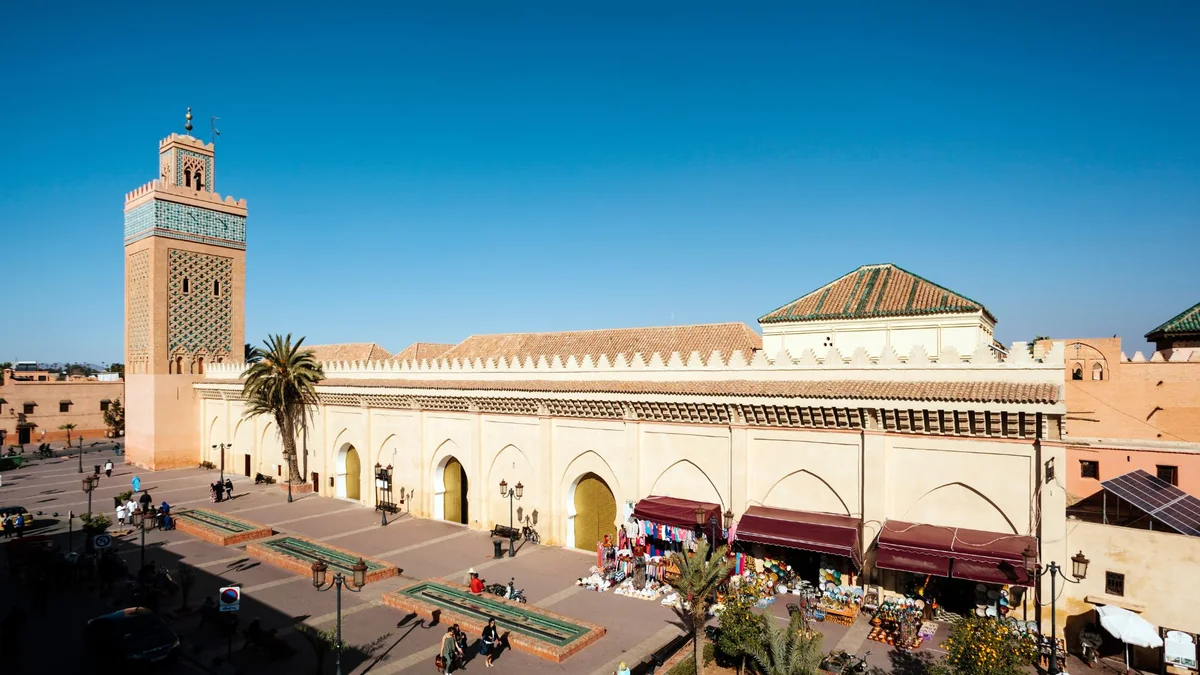
Official websites establish the advertised offer, without revealing commercial performance. Checked on 6 November 2026:
La Sultana Marrakech presents accommodation, a pool, spa and dining. Les Borjs de la Kasbah presents a hotel with a pool and spa. Le Pavillon de la Kasbah presents a ten-room hotel. Almaha Marrakech presents a boutique hotel with a restaurant, spa and rooftop.
This panel helps assess services, distribution and the guest experience; it is neither a price ranking nor an exhaustive inventory. Before preparing a business plan, compare access, services and public rates on identical terms.
Three lessons from the competitive landscape
First: offering a spa alone does not guarantee differentiation.
Second: the most organised properties sell a complete experience beyond the room.
Third: a new entrant needs a commercial identity that guests can immediately understand.
A riad can be beautiful without having a clear hotel concept.
This is precisely the distinction Darnel Collection seeks to address.
Three concepts to stand out in the Kasbah
Concept 1 — The Riad Social Club
Create a property that offers accommodation as well as a place for meetings and experiences.
Its programme could combine a rooftop, cooking workshops, meetings with artisans and themed evenings that comply with local rules.
The aim would be to build a community around the place.
Concept 2 — The Kasbah Signature Spa
Develop a recognisable wellness experience with exclusive rituals, personalised treatments and multi-hour programmes.
A spa welcoming outside guests could become a revenue centre in its own right, subject to authorisations and a profitability study.
Differentiation needs to justify a higher price than a standard treatment.
Concept 3 — The Moroccan Lifestyle Boutique Hotel
Combine contemporary Moroccan design, a restaurant, wellness, a shop, experiences and events.
The concept would target international travellers and, for certain services, local customers.
Our recommendation: a lifestyle concept offers interesting commercial potential for a ten-suite boutique hotel, but requires more staff, management and resources.
What could a four-room riad with a spa generate over five years?
Consider a four-room riad in the Kasbah.
The scenario assumes a gradual commercial ramp-up.
Average rates and revenue exclude tax and are expressed in constant euros, using a standard 365-day year, including 2028. Ancillary revenue is additional: services included in packages and exclusive-use bookings are never counted twice.
Room revenue = number of rooms × 365 × ADR × occupancy rate. Ancillary revenue = room revenue × annual ratio. Ancillary revenue is rounded to the nearest euro before being added to room revenue; profit amounts quoted in the text are rounded.
Which costs are included in the margins?
Under the simulation convention, margins include wages and employer contributions, OTA commissions and payment fees, management fees, marketing, energy and water, laundry, consumables, purchasing and direct costs for the spa, restaurant and shop, routine maintenance, insurance, administration and operating taxes. No property rent is included: the model assumes an owner-operator. These items are included by assumption, without quotations or a detailed budget validating their amounts.
The illustrative operating profit here is a surplus before financing, depreciation and income tax. Operating yield divides that surplus by the reference capital. Net return would require deducting depreciation, interest and tax, among other items, against a defined investment base and financing structure. Available cash flow also requires a cash budget covering tax paid, interest, loan principal repayments, replacement investment and changes in working capital. Major-repair and replacement reserves and initial working capital are not deducted from the margins. The tables therefore calculate neither a net return nor distributable cash flow.
2027–2031 projection — Four-room riad
| Year | ADR | Occupancy | Room revenue | Ancillary revenue | Total revenue |
|---|---|---|---|---|---|
| 2027 | 100 € | 60 % | 87 600 € | 17 520 € | 105 120 € |
| 2028 | 110 € | 65 % | 104 390 € | 22 966 € | 127 356 € |
| 2029 | 120 € | 68 % | 119 136 € | 28 593 € | 147 729 € |
| 2030 | 135 € | 70 % | 137 970 € | 34 493 € | 172 463 € |
| 2031 | 150 € | 72 % | 157 680 € | 39 420 € | 197 100 € |
Darnel assumptions, not observed results. Ancillary revenue equals 20%, 22%, 24%, 25% and 25% of room revenue respectively. The six-room scenario uses the same ratios; the ten-suite scenario uses 40%, 45%, 50%, 55% and 60%.
What operating profit could it generate?
With an illustrative operating margin of 20% to 30% of total revenue, after operating and marketing costs but before financing, depreciation and tax:
Year 1: approximately €21 000 to €31 500.
Year 5: approximately €39 400 to €59 100.
On an investment of €550 000, the indicative fifth-year operating yield would be 7.2% to 10.8%, calculated before rounding operating profit.
Management fees are included in the cost convention above. Actual expenses could reduce or eliminate this profit; a margin range does not replace a line-by-line budget.
What could a six-room riad with a spa generate?
A six-room riad has greater commercial capacity but generally requires more staff and operating expenditure.
Consider a premium property with a private spa and structured ancillary sales.
2027–2031 projection — Six-room riad
| Year | ADR | Occupancy | Room revenue | Ancillary revenue | Total revenue |
|---|---|---|---|---|---|
| 2027 | 120 € | 60 % | 157 680 € | 31 536 € | 189 216 € |
| 2028 | 130 € | 65 % | 185 055 € | 40 712 € | 225 767 € |
| 2029 | 140 € | 68 % | 208 488 € | 50 037 € | 258 525 € |
| 2030 | 150 € | 70 % | 229 950 € | 57 488 € | 287 438 € |
| 2031 | 160 € | 72 % | 252 288 € | 63 072 € | 315 360 € |
What profit might it generate?
With an illustrative operating margin of 22% to 32%:
Year 1: €41 600 to €60 500.
Year 5: €69 400 to €100 900.
For a total investment of €850 000, this represents an indicative fifth-year operating yield of 8.2% to 11.9%.
Exclusive-use bookings can provide another commercial channel, but their revenue must not be added to room nights already counted.
What could a ten-suite boutique hotel with a spa and restaurant generate?
A boutique hotel follows a different economic model.
Its potential depends on its suites and on its ability to attract outside customers.
Five revenue streams can be considered: room nights, ancillary sales, spa, restaurant and shop or packages.
2027–2031 projection — Ten-suite boutique hotel
| Year | ADR | Occupancy | Room revenue | Other revenue | Total revenue |
|---|---|---|---|---|---|
| 2027 | 180 € | 55 % | 361 350 € | 144 540 € | 505 890 € |
| 2028 | 200 € | 60 % | 438 000 € | 197 100 € | 635 100 € |
| 2029 | 230 € | 65 % | 545 675 € | 272 838 € | 818 513 € |
| 2030 | 260 € | 68 % | 645 320 € | 354 926 € | 1 000 246 € |
| 2031 | 300 € | 70 % | 766 500 € | 459 900 € | 1 226 400 € |
Other revenue includes ancillary sales, spa, dining and associated commercial activities.
Reaching almost €460 000 in ancillary revenue with ten suites notably requires developing a substantial outside clientele.
This is ambitious and requires a specific study of demand, space capacity and operating costs.
What operating profit could it achieve?
With an illustrative operating margin of 15% to 28%, fifth-year profit would range from:
€183 960 to €343 392 per year.
On an investment of €2 300 000, this represents an indicative operating yield of 8% to 14.9%.
This scenario does not demonstrate a net return above 20%.
Such a target would require more favourable investment, revenue or margin assumptions, with the associated risk assessed.
Comparing the three investment strategies
| Criterion | 4-room riad & spa | 6-room riad & spa | 10-suite boutique hotel |
|---|---|---|---|
| Reference investment | 550 000 € | 850 000 € | 2 300 000 € |
| Year 1 revenue | 105 120 € | 189 216 € | 505 890 € |
| Year 5 revenue | 197 100 € | 315 360 € | 1 226 400 € |
| Year 5 operating profit | 39–59 k€ | 69–101 k€ | 184–343 k€ |
| Management complexity | Moderate | Intermediate | High |
| Outside-customer potential | Limited | Selective | Significant |
These three scenarios address different strategies.
The four-room riad prioritises intimacy and a compact organisation.
The six-room riad spreads costs across a larger capacity.
The boutique hotel can develop several revenue centres but requires more structured management.
The right investment is not necessarily the one generating the most revenue: its risk, committed capital and potential profit need to fit your strategy.
Estimate your project’s potential returns
Explore the existing Kasbah Nelaria simulator. Its adjustable parameters are independent of the three projections above.
Compare several average-rate, occupancy, cost and ancillary-revenue scenarios before making a decision.
Kasbah Nelaria & Spa: our vision of a Marrakech boutique hotel
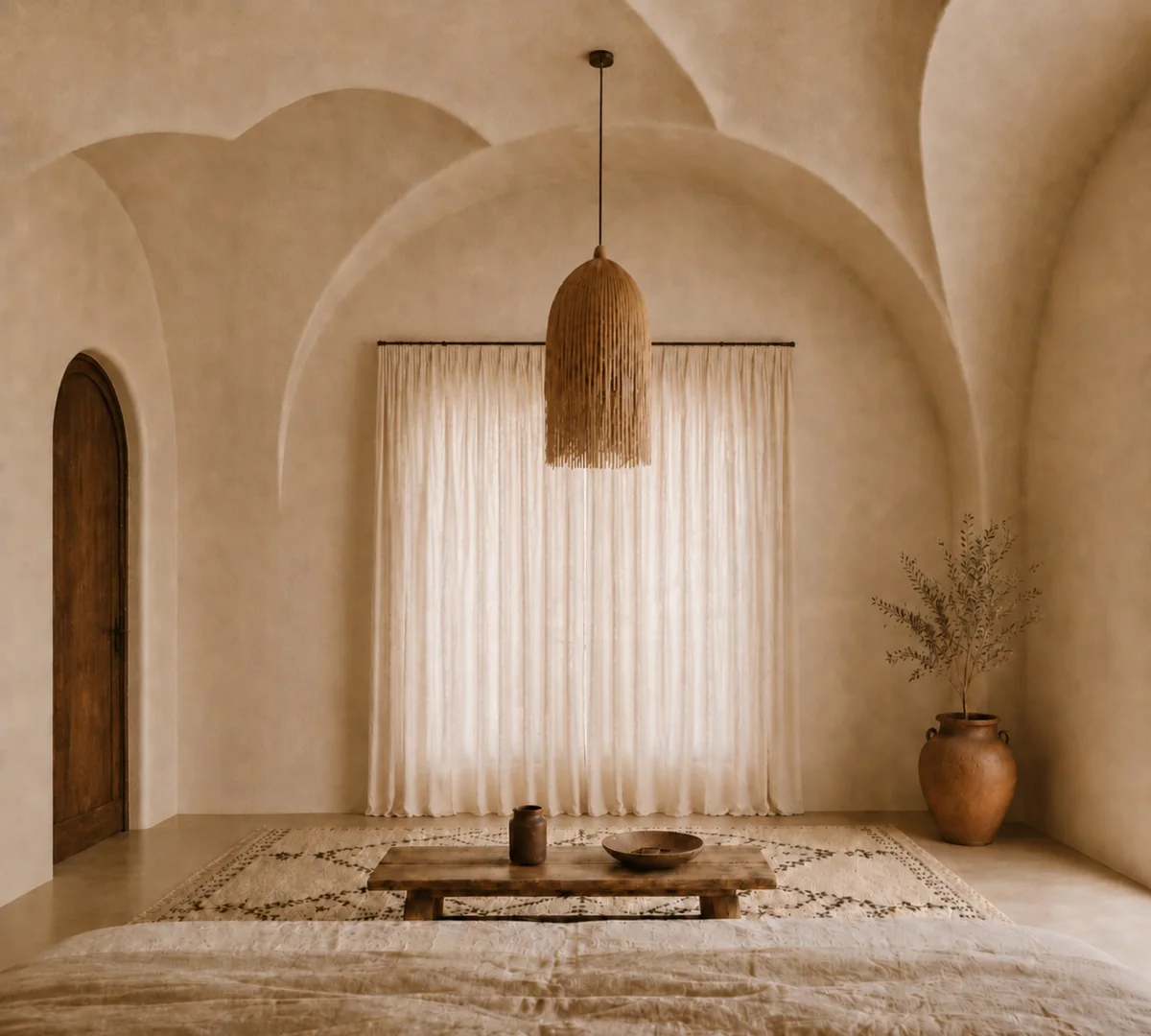
10 rooms • Kasbah • Boutique hotel & Spa
With Kasbah Nelaria & Spa, Darnel Collection is developing a concept combining premium accommodation, Moroccan architectural identity and ancillary activities.
The ambition is to welcome international travellers and offer certain services to outside customers, subject to the necessary authorisations.
The public project page describes a desert-inspired Berber Chic concept incorporating a spa intended for outside customers. Opening these activities remains subject to the necessary authorisations; no authorisation is presumed to have been obtained here.
Three key figures
10 rooms, according to the project page; the ten-suite market simulation remains a separate scenario.
Approximately 800 m² of intended developed floor area.
€2,000,000: the “from” price updated on 17 November 2026. The market simulation retains a separate €2.3 million assumption, without demonstrating that it covers acquisition fees, all equipment, financing or initial working capital. The commercial scope and total budget must be confirmed in the project dossier.
Dining and the spa need to contribute to revenue without compromising service quality or cost control.
Discover Kasbah Nelaria & Spa →
The financial projections above are market scenarios, not contractual or guaranteed results for Kasbah Nelaria.
Main risks before investing in the Kasbah
Property risk
An old riad may require structural work, waterproofing repairs or substantial renovation of technical installations.
Regulatory and land-title risk
Tourist accommodation, spas and restaurants open to outside customers require authorisation checks. Before planning a basement spa or one open to outside guests, have the architect and competent authorities confirm feasibility and access conditions. Check the registered title or Melkia, registration applications and any Zina rights with the notary and land registry. Presume no authorisation without validation. Hotel classification does not replace other required authorisations: Ministry of Tourism regulatory framework.
Commercial risk
An attractive location guarantees neither high occupancy nor a premium average room rate.
Operating risk
Staff, energy, maintenance, supplies and service quality directly affect margins.
The risk of overpaying
An excessive acquisition price can damage returns over the long term, even with strong operating performance.
Darnel advice: have the legal title, technical condition, authorisations, commercial potential and total budget assessed before committing.
Our five-step method for investing in the Kasbah
Step 1 — Identify the right property
Compare locations, access, floor areas, legal title and operating possibilities.
Step 2 — Build the business plan
Develop several ADR, occupancy, ancillary-revenue, cost and financing scenarios.
Step 3 — Design a distinctive concept
Define a clear experience suited to the target guests and the building’s characteristics.
Step 4 — Market the property for 90 to 180 days before opening
Prepare the website, content, videos, partnerships and booking channels before opening.
Step 5 — Professionalise the first 90 days
Track guest reviews, rates, direct bookings, ancillary sales and financial results.
Darnel Collection can support property design and development.
Darnel Hospitality can assist with marketing, launch and property management within the agreed scope.
Discover Darnel Hospitality’s services.
Book a meeting to assess your Kasbah investment →
FAQ — Investing in a Kasbah riad in 2027
Is the Kasbah a good neighbourhood for a riad investment?
It has significant heritage and tourism assets. The investment’s suitability nevertheless depends on the purchase price, property condition and business plan.
What budget should you allow for a four-room riad with a spa?
A total budget of €450 000 to €800 000 is a planning assumption to refine according to available properties and renovation needs.
What ADR should a premium Kasbah riad target?
A target of €110 to €170 could be considered for a four-room riad with a spa. It is not an observed neighbourhood average.
What revenue could a six-room riad generate?
In our scenario, revenue reaches approximately €315 000 in the fifth year, before costs.
Can a spa open to outside customers be profitable?
Yes, subject to sufficient demand, appropriate pricing and cost control. A specific study remains necessary.
Could a ten-suite boutique hotel exceed a 20% return?
This is a target to investigate, but the central scenarios presented here do not demonstrate it.
Can a riad be managed remotely?
Yes, with a competent local team, control procedures and regular financial reporting.
Further reading for your investment
Join the Darnel Collection Private Club →
Also considering moving to Morocco? Discover our French-language book Réussir sa nouvelle vie au Maroc: a practical guide to settling, investing and prospering.
Making intelligent use of the Kasbah’s hospitality potential
The Kasbah combines qualities sought by investors: a strong history, landmark monuments, distinctive architecture and a developed hospitality environment.
An investment should nevertheless rest on more than Marrakech’s tourism appeal.
The real question is whether the property’s price, commercial potential and operating costs can support sustainable returns.
At Darnel Collection, we favour projects combining distinctive architecture, a memorable guest experience and several revenue streams.
With Darnel Hospitality, the aim is then to turn this property potential into operating performance.
Are you considering a riad or boutique hotel investment in the Kasbah?
Have your budget, the property’s potential and several operating scenarios assessed before committing.
Book a meeting with Darnel Collection →
Georges Lelièvre — Darnel Collection
Preparatory study for 2027 based on market references and financial assumptions. Asking prices, competitor facilities and projections should be updated and checked before any investment decision.