Behind the scenes at Darnel
After ten years in hospitality in France, I chose to return to Marrakech to build a business
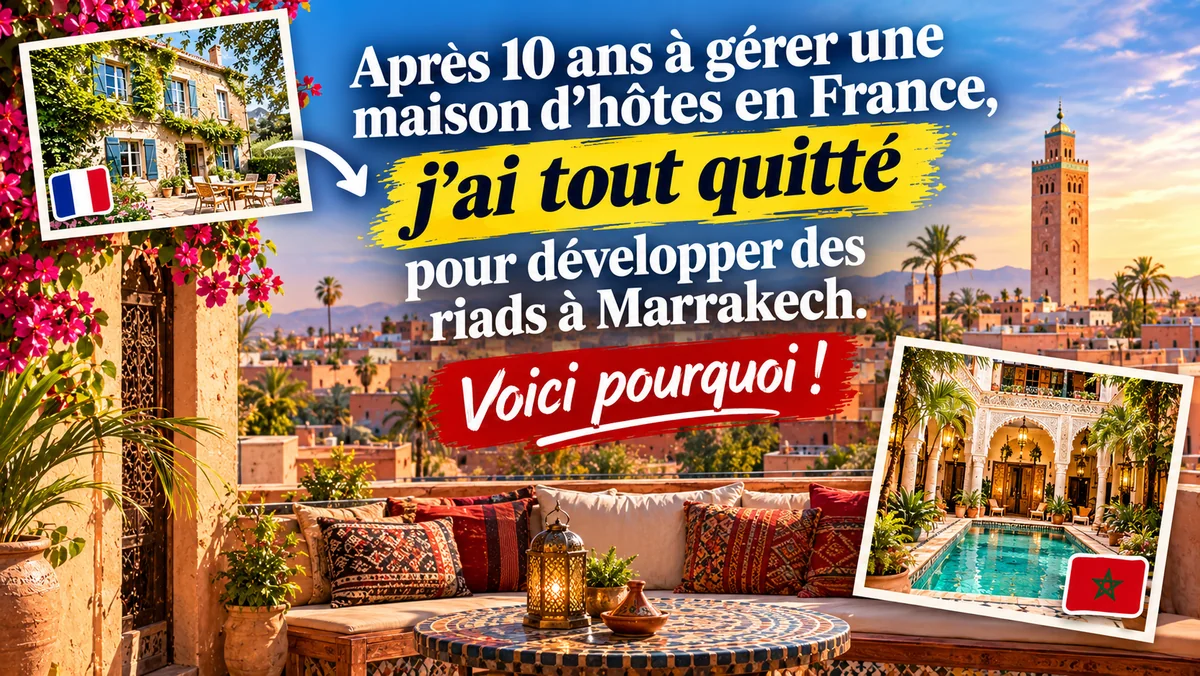
From Benslimane to the Canal du Midi, then from the Canal du Midi to Marrakech: Aïcha’s journey, ten years devoted to welcoming travellers and the decision to return to her country of birth to build a business with Georges.
I left Morocco when I was one year old. Several decades later, I returned with my husband, not to close a professional chapter, but to continue a vocation that has always fascinated me: hospitality.
Between those two moments came a life in France, ten years welcoming travellers to a twelve-bedroom guesthouse, thousands of encounters, a pandemic and a journey across Morocco that transformed our plans.
Today, with Georges, I am helping develop Darnel Collection and Darnel Hospitality in Marrakech.
We chose to bring together our two areas of experience: construction and hotel operations.
Before explaining what we are building today, I would like to tell you what brought me here.
For me, hospitality has never simply been a professional activity.
It is a way of welcoming people, sharing and introducing them to the best of one’s country.
Born in Morocco, I grew up in France without ever forgetting my roots
I come from Benslimane, in Morocco.
I arrived in France when I was just one. It is where I grew up, studied, worked and built a large part of my life.
Yet even thousands of kilometres from my country of birth, certain values never left me.
Family. Sharing. Generosity. Above all, that very particular way of welcoming people found in many Moroccan families.
In Morocco, welcoming someone means more than opening the door.
You take time to talk. You prepare something to eat. You make sure the person feels expected.
You are not simply receiving a visitor.
You are welcoming a person.
This culture of hospitality left a deep impression on me.
Without really knowing it, I was going to make it my profession.
Ten years at Le Relais de Pigasse, beside the Canal du Midi
For ten years, I helped operate Le Relais de Pigasse, a twelve-bedroom property beside the Canal du Midi in France. My days followed the rhythm of arrivals, departures, seasons and encounters. The place was much more than a job: it was my school of hospitality.
Ten intense years, full of encounters and learning.
We welcomed travellers from many countries, couples, families, groups of friends and some particularly unusual personalities!
It is one of the things I love most about this profession.
You never really know who will walk through your door.
Every arrival is a new encounter. Every stay can become a story.
Some people stay only one night and leave a lasting impression. Others return year after year and become regular guests.
Behind these wonderful moments lies a reality familiar to all guesthouse operators.
Hospitality is a wonderful profession, but an extremely demanding one.
We lived in our property
At the time, we lived on site, close to our guests.
There was an obvious advantage: we were available to resolve problems quickly.
A guest arriving late? We were there.
A water leak? We were there.
An unexpected problem at breakfast? Us again!
Looking back, I also recognise the cost of that permanent availability. I would not necessarily recommend this arrangement to every operator.
When you live in your property, the boundary between personal and professional life becomes very thin.
You often work seven days a week.
Even when you are not officially working, you remain available.
Nevertheless, the experience taught me something essential:
A hotel property does not operate solely through its bedrooms or decoration. It works through the people who bring it to life.
Covid: a lesson in resilience
Like many tourism professionals, we also lived through the Covid period.
Cancellations. Uncertainty. Restrictions. Concerns about the future.
That period reminded me how fragile our profession could be: an activity built with passion can be disrupted within weeks.
Above all, it taught me that an operator must know how to adapt.
Never take bookings for granted.
Anticipate expenses.
Diversify sources of guests.
Maintain enough perspective to make the right decisions.
After ten years, I knew how to welcome travellers.
I also knew how to run a guesthouse, but above all I had understood that sometimes you need to reinvent yourself.
That was precisely what was about to happen to us.
A month-long road trip in Morocco changed our lives
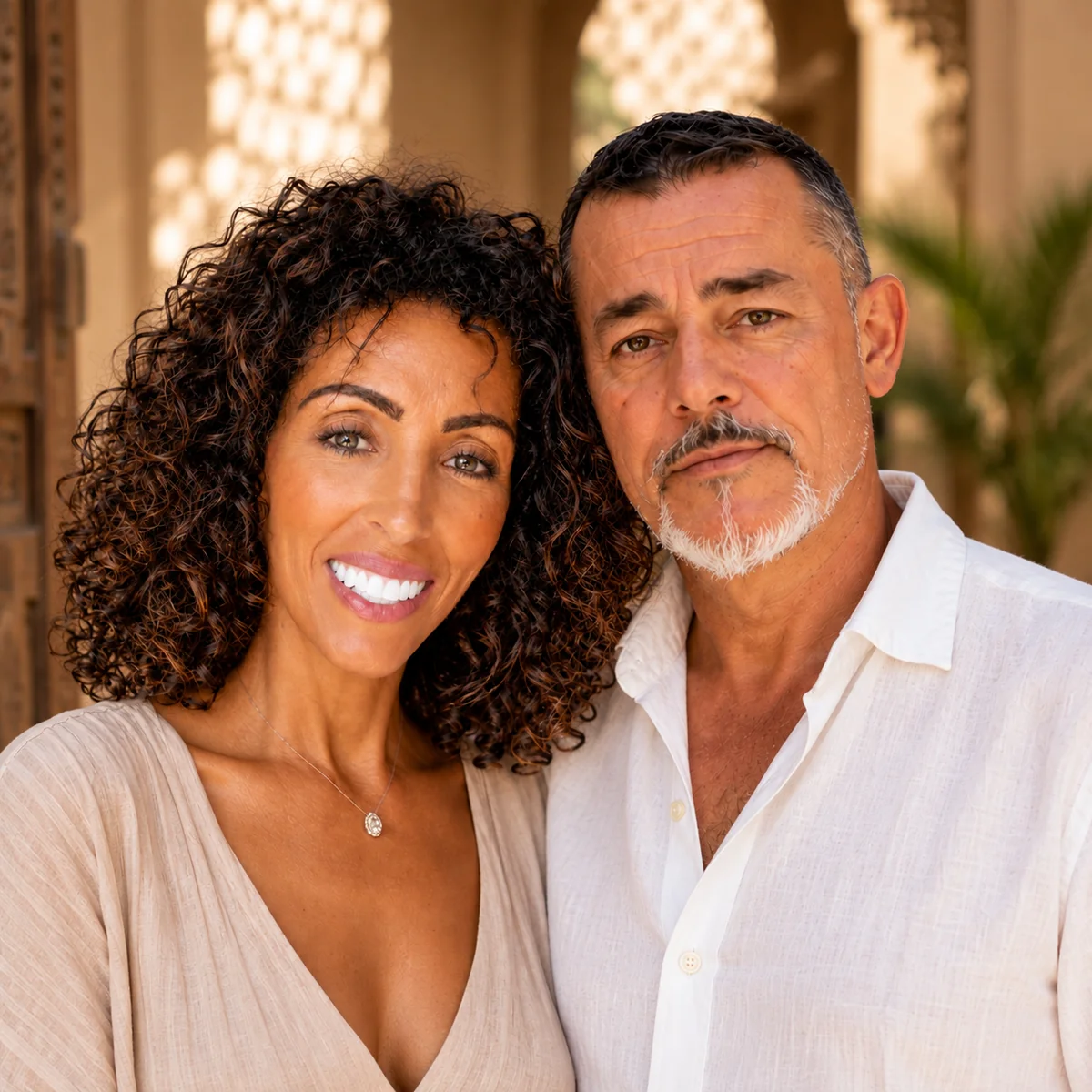
One day, I suggested to my husband Georges that we discover Morocco differently.
I did not want to show him only Marrakech or the best-known tourist destinations.
I wanted him to discover the country in all its diversity.
So we organised a month-long road trip, from north to south, all the way to Dakhla. It was neither a property-viewing trip nor a journey planned around a future project: first, we wanted to reconnect with the country, take time to explore it and introduce it to Georges.
We travelled through cities, discovered medinas, admired the Atlas landscapes, visited villages and met extraordinary people.
I wanted to show him the Morocco I love.
The Morocco of hospitality, culture and traditions, but also of entrepreneurs, craftspeople and people helping the country move forward.
The journey was a revelation. As the kilometres passed, I rediscovered familiar landscapes, ways of life and hospitality, while Georges discovered a Morocco much broader and more varied than the images he had known.
Most surprisingly, the idea of changing our lives did not come from me.
It was Georges who said on our return: “Come on, a new life is waiting for us in Morocco!”
He had fallen in love with the country.
And I, who had left Morocco at the age of one, found myself facing a possibility I had never really considered.
Returning to live in my country of birth.
Not simply to retire or enjoy the sunshine, but to build a business.
To build something there.
To contribute, in our own way, to promoting Morocco.
Sometimes, a journey is enough to change the course of a life.
You still need the courage to turn that desire into a real project.
Why did we choose Marrakech to build a business?
When we began thinking about moving, one question quickly arose.
What would we do in Morocco?
We did not simply want to change countries.
We wanted to keep working, creating and building businesses.
Georges has more than thirty years of experience in construction.
For my part, I had ten years of experience in tourism operations.
Our skills naturally complemented each other.
He knew construction.
I knew travellers and the realities of hospitality.
Marrakech seemed a particularly interesting destination in which to bring these two worlds together.
A tourist city, but a demanding market
Marrakech has remarkable international appeal.
Travellers from around the world come to discover its heritage, riads, restaurants, crafts and unique atmosphere.
But I would like to stress one point.
A city attracting many tourists does not mean all its properties are profitable.
Competition in Marrakech is considerable.
Some operators have twenty or thirty years of experience.
Others have substantial financial resources to create spectacular properties.
New riads regularly enter the market.
We therefore quickly understood one thing:
We did not simply want to open another riad.
We wanted to develop properties with a real identity, designed from the outset to offer a coherent experience and operate under sound conditions.
Places where travellers would seek an experience, rather than simply a room.
Riads: an exceptional part of Moroccan heritage
I deeply love the architecture of riads.
Their courtyards.
Their terraces.
Their materials.
Their ability to create a true haven of peace behind what can be a very discreet door.
I would also like to point out that this heritage extends beyond Marrakech.
The medinas of Fez, Tetouan and Tangier also deserve to be discovered.
Each has its own history, architecture and atmosphere.
That is how our vision for Darnel Collection was born.
Our first conviction: creating riads that travellers never forget
Today, a pretty courtyard and four comfortable bedrooms are not always enough.
Travellers compare properties on Booking, Google, Instagram and booking websites.
They look at photographs, amenities, reviews and prices.
Sometimes they decide within seconds whether they want to know more.
So we chose to develop collection riads.
Properties with an identity.
Recognisable architecture.
A coherent guest experience.
Services capable of justifying their price positioning.
INVESTMENT CASE: DAR LÉON & SPA
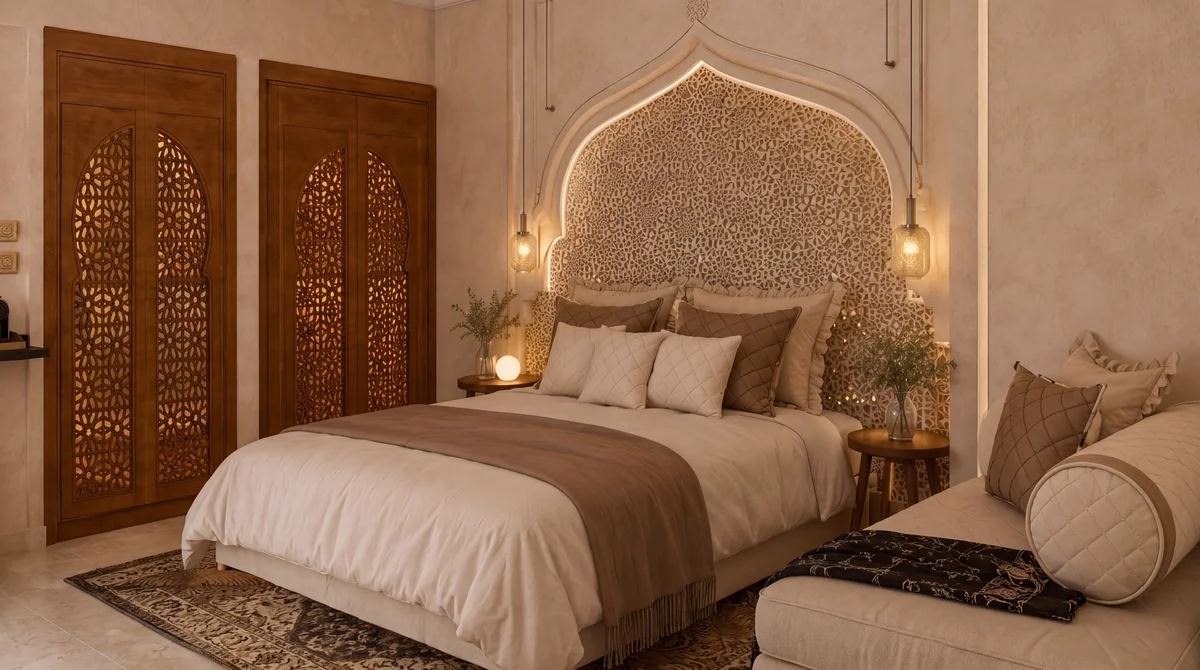
4 bedrooms • Bab Doukkala • Riad & Spa
Dar Léon illustrates this philosophy.
Located in Bab Doukkala, this four-bedroom project was conceived as an intimate riad combining Moroccan architecture, contemporary comfort and wellbeing.
With approximately 200 m² of total floor area, including the terrace, the project is designed so that every space contributes to the guest experience.
The aim is to offer somewhere sufficiently distinctive to attract guests seeking more than simple accommodation.
Three key figures:
4 bedrooms.
Approximately 200 m² of total floor area.
Marketing price: €550 000 excluding fees
Explore the Dar Léon & Spa project →
What about more ambitious projects?
With Kasbah Nelaria, we are exploring hospitality on another scale.
That of a ten-suite boutique hotel combining premium accommodation, a spa, dining and personalised experiences.
This type of property offers the prospect of several income streams.
But take care: designing a beautiful hotel is not enough.
You then need to know how to market and operate it.
That is precisely what led us to develop our second conviction.
A riad should start selling before it opens
There is a mistake I regularly see in hotel projects.
Owners invest in the acquisition.
They finance the works.
They choose materials, furniture and equipment.
They recruit their teams.
Then, a few weeks before opening, they start thinking about marketing.
To me, that is too late.
Why?
Because a brand needs time to become known.
Because travellers sometimes book several months in advance.
Because a new property needs to build credibility.
Turning a building site into a story
I particularly like properties that tell the story of their creation.
The choice of materials.
The work of craftspeople.
Construction difficulties.
Transformations.
Decoration.
Then the arrival of the first guests.
This communication helps build a relationship with the public even before opening.
The traveller no longer discovers only a finished property.
They have followed its birth.
At Darnel Collection, we want to develop this approach through our content, videos and the stories behind our projects, introducing the work of teams and craftspeople as much as the final result.
Essential tools
The aim is not simply to generate visibility.
The aim is to turn that visibility into profitable bookings.
A video can receive thousands of views without generating many customers.
What really matters is the number of qualified travellers who discover your property and want to stay there.
Why do I believe so strongly in direct bookings?
It is one of the aspects of hotel operations that fascinates me most.
How can you develop a clientele that books directly with the property?
Booking and other platforms play an important role.
They help reach international guests and fill rooms.
But they also represent a marketing cost.
Above all, they must not become the only source of bookings.
Riad Dar Augusta: a story that inspires me
In Marrakech’s Kasbah, Bouchra and Jérôme developed a distinctive property around their passion for golf.
At Riad Dar Augusta, travellers come for an experience that goes beyond accommodation.
They meet the owners.
They share activities.
They discover Marrakech.
Some return regularly.
Bouchra and Jérôme told us that approximately 90 % of their bookings were made directly. This figure reflects their experience and particular model; it is not a market average.
It is a particularly interesting result, built through loyal guests and specific positioning.
This figure should obviously not be regarded as a market average.
But their experience illustrates a conviction I share: when a traveller comes for your world and your experience, rather than simply your price, you have more opportunities to build a lasting relationship.
Discover the Riad Dar Augusta success story
Our aim: gradually increasing direct bookings
For some well-positioned riads, eventually achieving a substantial share of direct bookings can be an ambitious commercial objective. The realistic level nevertheless depends on each property’s profile, clientele, marketing resources and positioning.
This requires time, a good reputation, an effective website, a loyalty strategy and partnerships.
Acquisition costs must also be measured.
A direct booking is not necessarily free: when it comes from an advertising campaign, it too carries an acquisition cost.
But it gives you greater control over the relationship with the traveller.
Operating a riad means doing three jobs at once
After ten years in a guesthouse, I can assure you that hotel operations are much more complex than they appear.
On social media, you see beautiful courtyards, breakfasts and rooftops.
You see much less of the cancellations, technical problems, recruitment difficulties and endless working days.
For me, running a riad means doing three jobs.
First job: attracting travellers
You need to know how to market the property.
Set prices.
Manage availability.
Develop partnerships.
Optimise booking platforms.
Gradually build a direct clientele.
Second job: satisfying travellers
The welcome, cleanliness, breakfast quality, responsiveness and small touches make all the difference.
A satisfied traveller can become an ambassador.
Conversely, a poor experience can damage a property’s reputation for a long time.
Third job: managing a business
You need to recruit, train, organise and support your teams.
Control spending.
Monitor cash flow.
Plan maintenance work.
Make sometimes difficult decisions.
These three jobs require different skills.
A beautiful riad may attract a traveller the first time. The quality of its operations will make them want to return.
Why do some riads remain empty while tourism grows?
It is a paradox we observe on the ground.
Morocco attracts many travellers.
Yet some owners struggle to fill their bedrooms.
How can this be explained?
Because growth in a country’s tourism does not guarantee revenue growth for every property.
A riad may suffer from poor pricing positioning.
Unappealing photographs.
An insufficient reputation.
A lack of differentiation.
Excessive dependence on a single platform.
Seasonality also plays an important role.
Periods of intense heat, variations in demand and changes in traveller behaviour must be anticipated.
The question I recommend asking
Rather than asking:
“Why aren’t tourists coming?”
I prefer to ask:
“Why do travellers choose another riad instead of mine?”
That reflection is the starting point for building a marketing strategy.
A property can develop romantic stays, wellbeing offers, private bookings, golf holidays or cultural experiences.
But these offers must fit its clientele, amenities and costs.
The aim is not to sell more at any price.
It is to build a sustainable operation.
Why did we decide to show the real Marrakech on video?
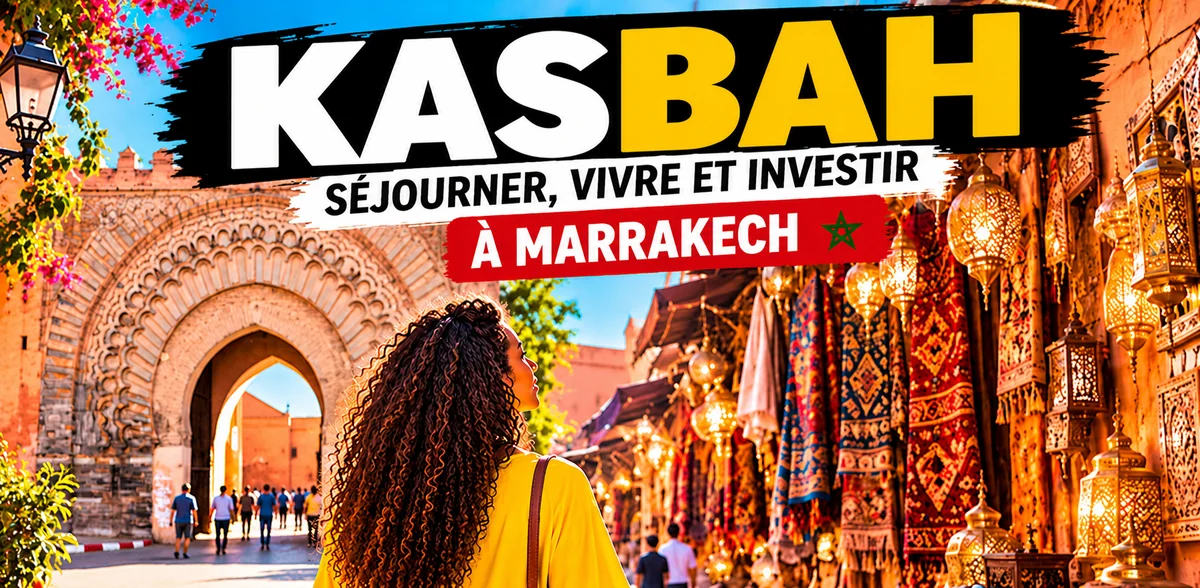
With Georges, we launched a video series entitled:
“Stay, Live and Invest in Marrakech 🇲🇦”
Our ambition is to show the Medina differently.
Not just through monuments and postcard images.
Through the people who live and work there.
Craftspeople.
Entrepreneurs.
Shopkeepers.
Residents.
Riad operators.
Watch our VLOG about Marrakech’s Kasbah →
Why devote so much time to video?
Because I believe it can create a different relationship with travellers.
A photograph shows a bedroom.
A video can convey the experience awaiting the guest.
It is also a wonderful tool for presenting a property to travellers who do not yet know Marrakech.
At Darnel Hospitality, we want to develop this approach to support the marketing of riads and boutique hotels.
Why did we create Darnel Hospitality?
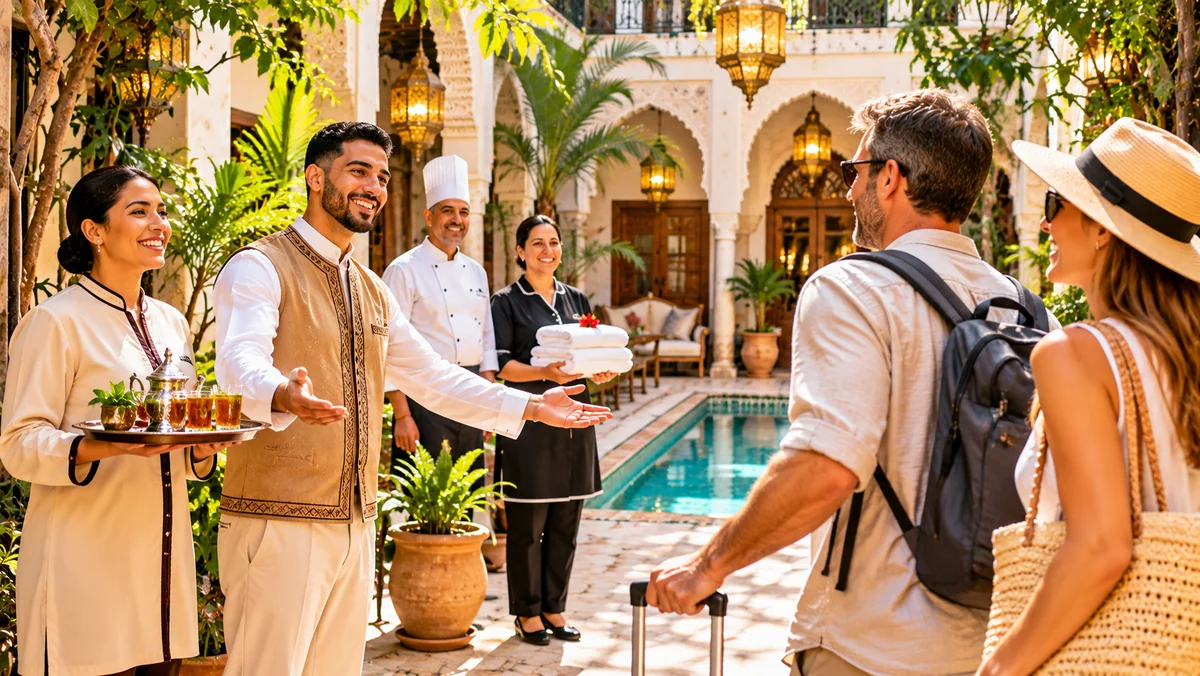
After ten years of experience in guesthouses, I know the demands of this profession.
I know what welcoming travellers means.
Managing teams.
Solving problems.
Maintaining standards of service.
But I also understand that a property can offer remarkable hospitality while encountering commercial difficulties.
That is why we created Darnel Hospitality.
Our ambition is to help owners of riads and boutique hotels in Marrakech improve their performance.
Not simply by managing bookings.
By working on the main drivers of value creation.
Our six areas of support
- Revenue management. Adapt prices to demand, seasonality and the property’s positioning.
- Digital marketing. Increase visibility through the website, organic search, social media and video.
- Commercial partnerships. Build a network of travel agencies, tour operators and specialist partners.
- Guest loyalty. Encourage direct bookings and turn satisfied travellers into regular customers.
- Advertising campaigns. Attract qualified travellers and measure the acquisition cost of bookings.
- Additional sales. Develop experiences, packaged stays, spa treatments and complementary services.
Two needs, two approaches
Some owners already have a competent team.
Their main aim is to improve marketing, rates and bookings.
Others want to delegate their entire property’s management.
We can support both situations through specific commercial services or more comprehensive hotel management.
Darnel Hospitality can help without necessarily taking over the property’s full management.
Our objective remains the same:
Help owners manage their investment more effectively while offering travellers a remarkable experience.
Discuss your property with Darnel Hospitality →
Before investing in a riad, analyse its true profitability
This is probably the most important advice I can share.
Never make an investment decision solely because a riad is magnificent.
Do not rely only on attractive projected revenue.
You need to study its real potential.
How many bedrooms can be operated?
At what average rate?
With what occupancy?
What will the expenses be?
What additional income can be developed?
Above all, what result will remain after operating and management costs?
DARNEL RIAD PERFORMANCE AUDIT™
We designed an audit for owners and investors who want a better understanding of a property’s potential performance.
It includes analysis of positioning, competition, prices, expenses and additional revenue in particular.
We also build five-year financial projections.
This audit does not predict the future or guarantee any result.
It helps decisions rest on a more structured basis.
Request an analysis of your riad project →
My new chapter: contributing to the reputation of Moroccan hospitality
When I think back on my ten years at Le Relais de Pigasse, I feel great gratitude.
I learned my profession there.
I met extraordinary people there.
I discovered how welcoming travellers can enrich a life.
I also understood that a hotel property cannot succeed sustainably without work, rigour and commitment.
Today, I am rediscovering my Moroccan roots through a new entrepreneurial adventure.
With Georges, we are gradually building our project in Marrakech.
There is still much to do.
Properties to create.
Teams to train.
Partners to meet.
Certainly new difficulties to overcome.
But I am happy to have made this choice.
Because I deeply believe in the potential of Moroccan hospitality.
Because I believe we can help enhance it by combining tradition, professionalism and innovation.
Are you also considering a new life in Morocco?
If our story inspires you, we have also written a book for those who want to take the step.
Réussir sa nouvelle vie au Maroc: the practical guide to settling, investing and thriving.
We share advice on preparing a move, understanding opportunities and avoiding certain mistakes.
Join our Private Circle
Receive our analyses, profitability studies and new investment opportunities in Marrakech.
Join the Darnel Collection Private Club →
FAQ: opening and operating a riad in Marrakech
Is opening a riad in Marrakech profitable?
A riad can be profitable if its acquisition price, positioning, revenue and expenses are coherent. Profitability should be evaluated through several financial scenarios.
Do you need hotel experience to invest in a riad?
You do not have to be an operator yourself, but you must have the necessary skills or surround yourself with a professional team.
How can a riad attract more travellers?
By combining a distinctive offer, an official website, booking platforms, organic search, social media, partnerships and guest loyalty.
How can direct bookings be increased?
By developing a recognisable brand, a quality guest experience, an effective booking engine and a loyalty strategy.
Can you manage a riad from France?
Yes, provided you have a competent local team, operating procedures and regular reporting.
Why have a riad audited before investing?
To identify its potential revenue, expenses, risks and the conditions required for profitable operations.
Conclusion: sometimes changing your life means returning to what matters
I was born in Benslimane, Morocco.
I grew up in France.
I then devoted ten years to welcoming travellers at Le Relais de Pigasse, a twelve-bedroom guesthouse.
Then one day, a journey with my husband made us want to build a new life in Marrakech.
Today, I continue this adventure around what has always driven me: hospitality.
With more experience.
A different vision.
A new ambition.
To make Marrakech’s riads not simply beautiful places to sleep, but homes where travellers have unforgettable experiences.
To help their owners turn them into sustainable businesses.
Because, deep down, I have not really changed professions.
I have simply chosen to bring my passion to life where my roots are.
Aïcha El Ouahidi — Co-founder of Darnel Collection and founder of Darnel Hospitality.